Frontiers in immunology
Cure8 research brief
Cure8 research brief
This review links molecular pathways (acetylation and ubiquitination) to key inflammatory cell-death mechanisms relevant to ulcerative colitis; confirming these links in intestinal cells could identify new biomarkers or drug targets for IBD.
Researchers studying IBD molecular mechanisms, translational scientists exploring new therapeutic targets or biomarkers, and clinicians interested in immunopathology research.
This paper synthesises published studies (through 10 Aug 2026) on acetylation–ubiquitination crosstalk affecting NLRP3 and GSDMD.
The authors propose a substrate-state framework (abundance, activation competence, localisation, persistence) to organise evidence from non-intestinal and intestinal models, including experimental colitis, but emphasize that full coupling of the modifications has not been demonstrated in human UC.
The review highlights examples where acetylation or ubiquitination individually alters NLRP3 assembly/activation or GSDMD activity/abundance, and notes some non-intestinal studies supporting direct coupling at specific proteins.
However, site-level competition between modifications at the same lysine and definitive intestinal-cell evidence are largely lacking. The take-away is mechanistic: this is a synthesis and conceptual framework pointing to areas for targeted laboratory and translational work rather than a source of clinical recommendations.
This article is a descriptive review (structured as an abstract-level synthesis) that organises existing studies but does not present new clinical trial data or validated biomarkers. Many findings come from non-intestinal or experimental-colitis models; coupling at defined intestinal cell types and specific modification sites in human UC remains to be established.
Review the original publication for the complete reporting, methods, and context.
This Cure8 brief is based on source text from the linked article. Cure8 is informational only and is not a substitute for professional medical advice, diagnosis, or treatment.
If you have IBD, emerging forms of regulated cell death may help explain ongoing intestinal inflammation and could become targets for future tests or treatments. This review highlights multiple RCD pathways linked to...
The review shows increasing research linking ferroptosis to autoimmune diseases including IBD and ulcerative colitis, which may guide future biomarker and therapy research relevant to people with Crohn's disease or other...
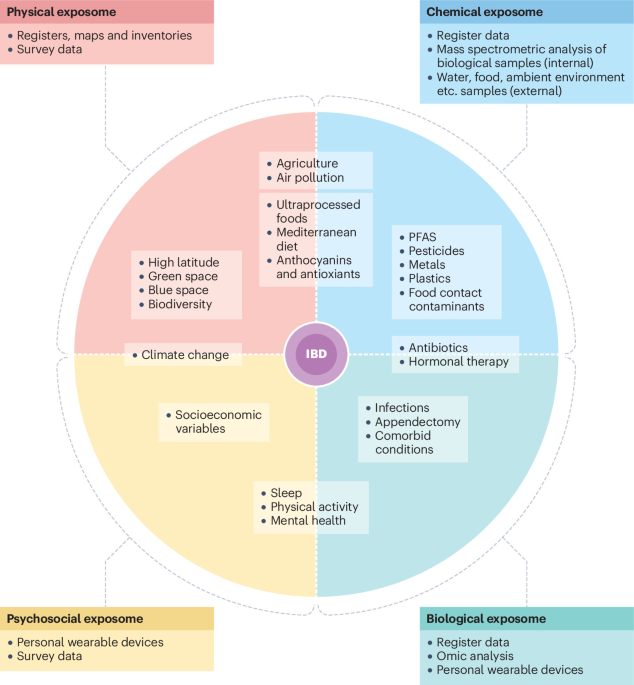
The exposome perspective emphasizes that many non-genetic, potentially modifiable environmental factors likely influence IBD risk. Understanding these factors could help guide prevention research and public-health...