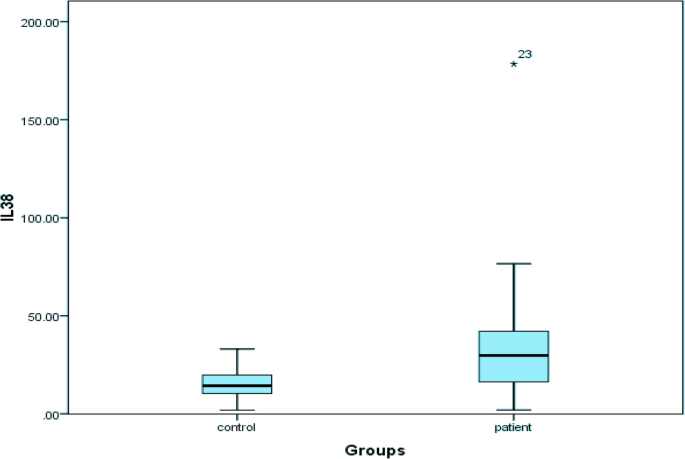
IL-38 and a genetic variant (rs7599662) were linked to ulcerative colitis in this study, suggesting a possible new biomarker or therapeutic target. If validated, this could help researchers better understand UC inflammation and eventually inform diagnostics or treatments.
Who Should Pay Attention
Researchers in IBD immunology and genetics; clinicians following biomarker research; patient advocates and informed patients interested in UC research developments.
Study Snapshot
Story typeResearch paper
Evidence typeResearch paper
Source depthJournal abstract
What To Know
This abstract reports a case-control clinical study that measured serum interleukin-38 (IL-38) levels by ELISA and genotyped the IL-38 polymorphism rs7599662 by RT‑PCR in 78 ulcerative colitis (UC) patients and 78 healthy controls.
The authors found higher IL-38 serum concentrations in UC patients and an association between the TT genotype of rs7599662 and increased UC risk. The study suggests IL-38 and this variant could be investigated as a biomarker or therapeutic target for UC. The report is an abstract-level clinical study; Cure8 did not review the full paper.
Key details—such as recruitment, disease activity of patients, adjustments for confounders, exact effect sizes, and replication—are not available in the provided abstract. Patients should not change treatment or testing based on this single report.
Clinicians and researchers may view this as preliminary evidence that merits further validation in larger, well-controlled cohorts. Researchers studying IBD pathogenesis, genetics, or biomarkers; clinicians interested in emerging UC biomarkers; and patients or patient advocates following research on new diagnostic or therapeutic targets.
This summary is based on the article abstract (structured-content depth: abstract). The study appears to be a modest-sized case-control analysis; results require replication and peer-reviewed full-text scrutiny before clinical use.
Keep In Mind
Findings are from an abstract-level clinical study (78 cases, 78 controls). The full paper’s methods, statistical adjustments, and effect sizes are not available here. Results need replication before changing clinical care.
Source Details
Review the original publication for the complete reporting, methods, and context.
This Cure8 brief is based on source text from the linked article. Cure8 is informational only and is not a substitute for professional medical advice, diagnosis, or treatment.
Researchers are exploring circRNAs as new molecular players in IBD inflammation; that could lead to future biomarker tests or novel treatments targeting immune pathways relevant to Crohn’s disease and ulcerative colitis.
Researchers used genetics, microbiome, metabolism, and immune profiling together to nominate biological pathways and a four-gene signature that might help diagnose or explain ulcerative colitis. If validated later, these...
Distinguishing Crohn’s from ulcerative colitis can be hard and often requires invasive tests. A reliable blood test would speed diagnosis and help patients start the right treatments sooner. This study is an early step...