Mucosal immunology
Cure8 research brief
Cure8 research brief
IBD patients have higher risk of colitis-associated colorectal cancer; this study suggests dietary choline might protect the intestinal barrier and reduce inflammation-driven tumor risk via a nutrient–transporter–Notch1 pathway.
The finding could point to new research directions for prevention strategies focused on mucosal defense and goblet cell function.
Researchers studying IBD pathogenesis, mucosal immunology, and cancer prevention; clinicians interested in mechanisms of barrier protection; translational scientists exploring nutrient-based interventions; and informed patients curious about diet–gut interactions.
This abstract reports a basic-science study linking dietary choline, the high-affinity choline transporter SLC5A7, and protection against inflammation-driven colorectal tumorigenesis. In mouse models, intestinal-epithelial deletion of SLC5A7 worsened DSS colitis and AOM/DSS tumorigenesis; single-cell RNA-seq showed goblet cell loss and barrier defects.
Mechanistically the authors describe SLC5A7 binding Notch1 and promoting its proteasomal degradation, which favors goblet cell differentiation; dietary choline increased SLC5A7 and inhibited Notch1 in human colonic cells and organoids. Protective effects of choline were lost in SLC5A7-deficient mice. Structured content depth: abstract.
This report is an abstract of basic-science work using mouse models, human colonic cells, and organoids. It describes mechanistic findings but does not establish clinical benefit in people with IBD. Dietary choline effects, dosing, safety, and relevance to human disease require clinical studies before changing patient care.
Review the original publication for the complete reporting, methods, and context.
Conflict statement: Declaration of competing interest The authors declare that they have no known competing financial interests or personal relationships that could have appeared to influence the work reported in this paper.
This Cure8 brief is based on source text from the linked article. Cure8 is informational only and is not a substitute for professional medical advice, diagnosis, or treatment.
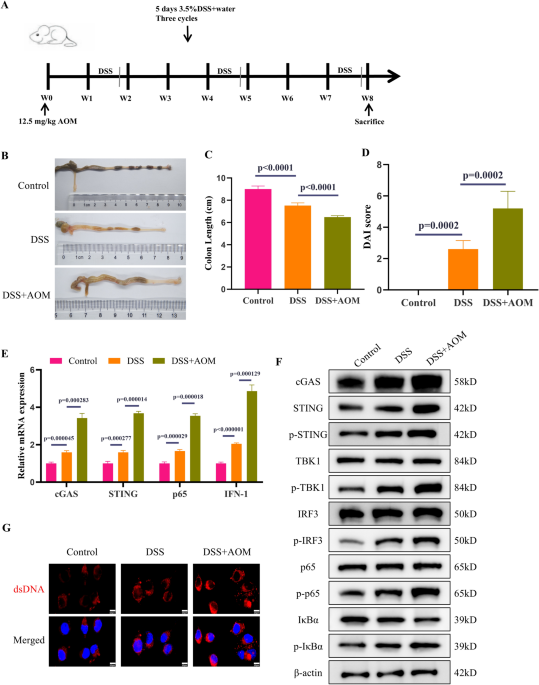
The study links cGAS–STING activation to NF-κB–driven inflammation and tumor formation in models of UC progressing to colitis-associated colorectal cancer, highlighting a pathway that could be relevant to understanding...
The study links activation of the cGAS–STING immune-sensing pathway to NF-κB–driven inflammation and tumor formation in UC models, which could help explain mechanisms behind colitis-associated colorectal cancer risk.
The paper identifies a biologic pathway that links epithelial AhR signaling to NK cell–mediated tumor surveillance in the colon. For people with IBD, mechanisms that increase immune escape could relate to...