Evolution, medicine, and public health
Cure8 research brief
Cure8 research brief
This large register study suggests childhood appendectomy may change later risk of several common conditions while being associated with lower IBD risk — information that could matter to patients, parents, and clinicians thinking about long-term immune and gut health after appendectomy.
Parents and caregivers of children who had appendectomy, adult patients with a childhood appendectomy, gastroenterologists, pediatricians, and researchers studying gut immunity or the microbiome.
The study followed up to 1,071,086 children born 1979–1999 using national registers, comparing those who had appendectomy before age 12 with matched controls. Analyses adjusted for multiple perinatal and socioeconomic factors.
Childhood appendectomy was associated with increased relative risks for several disease categories (notably digestive and respiratory) and a reduced relative risk for later IBD. The reported associations are population-level and do not prove the surgery causes these outcomes for any individual.
Absolute risk increases reported were modest for most outcomes, though measurable at the population scale. The paper frames findings as consistent with a role for the appendix in gut biofilm or immune function, particularly during childhood. If you or a child had an appendectomy, this study does not change immediate postoperative care.
It may inform longer-term surveillance research questions and motivate further studies into mechanisms and whether specific subgroups carry different risks.
Structured content depth: abstract. The supplied text is from the article abstract and reports associations from observational registry data; associations do not prove causation. Absolute risk differences were described as modest at the population level. The study period and Danish register setting may affect generalizability.
Review the original publication for the complete reporting, methods, and context.
This Cure8 brief is based on source text from the linked article. Cure8 is informational only and is not a substitute for professional medical advice, diagnosis, or treatment.
People with celiac disease may have higher risks for several digestive cancers and for inflammatory bowel diseases (Crohn’s and UC) according to this large French cohort study. Knowing these associations can help...
Skin disease (hidradenitis suppurativa) may be more common in people with IBD—particularly Crohn disease—and could be linked with more severe intestinal complications. Awareness can prompt coordinated care between...
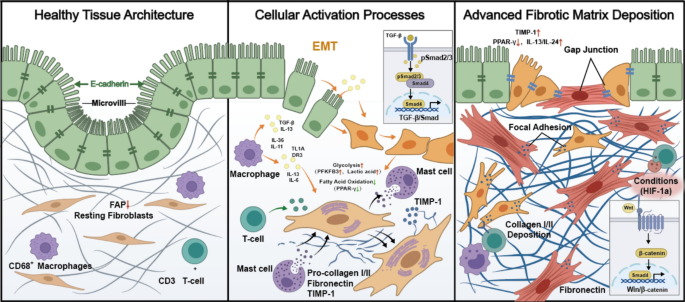
Intestinal fibrosis causes strictures that can lead to obstruction and often require surgery; current drugs mainly reduce inflammation and do not reliably prevent or reverse fibrosis. Advances in understanding fibrosis...