Creatine Preserves Colonic Epithelial and Vascular Barrier Integrity and Epithelial Scutoid Geometry Across Active and Remission Phases of Chronic Colitis with Sex-Specific Effects
If findings translate to humans, creatine might help protect the gut lining and blood vessels during flare and remission, potentially supporting recovery of gut barrier function in ulcerative colitis.
Who Should Pay Attention
Researchers studying IBD mechanisms or therapies, clinician-scientists interested in barrier function and adjunctive treatments, and translational researchers considering creatine for clinical testing.
Study Snapshot
Story typeResearch paper
Evidence typeResearch paper
Source depthJournal abstract
What To Know
The study used a dextran sulfate sodium (DSS) chronic-colitis model in male and female rats and evaluated clinical signs, inflammation markers, epithelial architecture (including scutoid geometry) and vascular barrier proteins.
Creatine-treated animals showed less colonic damage, lower pro-inflammatory cytokine upregulation, preserved mucin-2 and tighter junction/adhesion protein localization (ZO-1, claudin-5, E-cadherin, β-catenin), and intact endothelial markers (caveolin-1, PV-1). Effects appeared stronger during the active phase and more pronounced in males.
This is a laboratory (animal) preprint report, not a clinical trial in people, so it shows biological plausibility and mechanisms but does not establish safety or efficacy in patients with ulcerative colitis.
Keep In Mind
This is a preprint reporting an animal (DSS) model study. Preclinical results do not guarantee similar effects in humans; clinical trials would be needed to assess safety, dosing, and efficacy in people with UC. The article reports sex-specific effects in rats that may or may not apply to humans.
Source Details
Review the original publication for the complete reporting, methods, and context.
This Cure8 brief is based on source text from the linked article. Cure8 is informational only and is not a substitute for professional medical advice, diagnosis, or treatment.
Researchers used a standard mouse colitis model to show a traditional herbal formula reduced inflammation and improved gut barrier markers, implicating the IL-33/ST2 immune pathway. This could guide future preclinical...
This study identifies a plant-derived polysaccharide (from the stem of Dendrobium huoshanense) that reduced inflammation and tissue injury in a mouse model of ulcerative colitis and points to GLP-1 signaling as a likely...
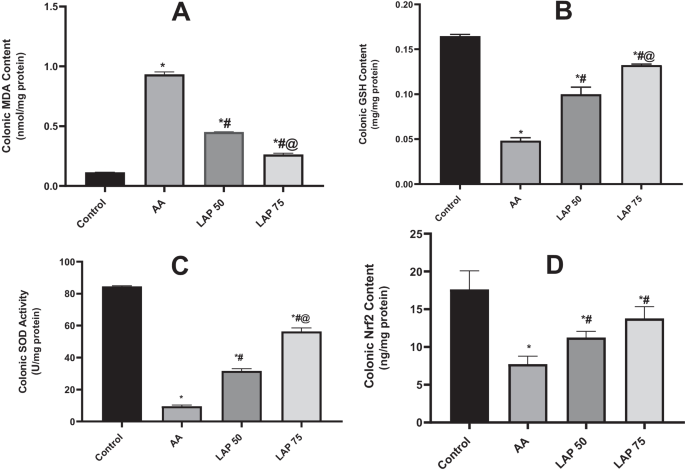
This study suggests the cancer drug lapatinib reduced colon damage and liver changes in a rat model of chemical colitis, which could point to new research directions for IBD treatments or gut–liver injury mechanisms.