Research funding supports early-stage studies that could identify new causes, targets, or tests for Crohn’s disease and ulcerative colitis. Progress in these areas may lead to more personalized treatments or prevention strategies in the future.
Who Should Pay Attention
People living with Crohn’s disease or ulcerative colitis, caregivers, clinicians interested in emerging IBD science, and researchers working on microbiome, immune pathways, genetics, or novel therapeutics.
Study Snapshot
Story typePatient Advocacy
Evidence typePatient Education
Source depthFull source text
What To Know
Crohn’s and Colitis Canada announced a CAD $1.5 million investment across four Grants-in-Aid research projects (CAD $375,000 each) to fund studies into mechanisms and potential treatments for Crohn’s disease and ulcerative colitis.
Funded projects include work on host–microbe–immune interactions and postoperative recurrence, STING pathway signaling related to an ATG16L1 variant, investigating Mycobacterium avium paratuberculosis (MAP) and antibiotic approaches, and studying PCSK9/PCSK7 roles in epithelial regeneration.
These investments are early-stage research funding rather than clinical trial results. The announcement emphasizes building foundational evidence that could inform future diagnostics, targets, or trials rather than offering immediate changes in care.
If you want more detail, the funded teams and institutions are listed in the release (Mount Sinai, University of Toronto, McGill), and media interviews with researchers are available on request from Crohn’s and Colitis Canada. This brief is based on the organization’s press release published via Yahoo!
Finance / Globe Newswire and summarizes the funded projects described there.
Keep In Mind
This is a press release describing grant awards and planned research; it does not report study results or clinical recommendations. Projects are investigator-driven and aimed at building evidence that may enable future trials or diagnostics.
Source Details
Review the original publication for the complete reporting, methods, and context.
This Cure8 brief is based on source text from the linked article. Cure8 is informational only and is not a substitute for professional medical advice, diagnosis, or treatment.
Clinical trials expand treatment options and are how new IBD therapies are tested and approved. Low enrollment can delay access to future treatments for Crohn’s and ulcerative colitis.
Clinical trials are how new IBD tests and treatments are developed; joining one can give access to interventions and helps improve care for people with Crohn’s disease or ulcerative colitis. The article gives practical...
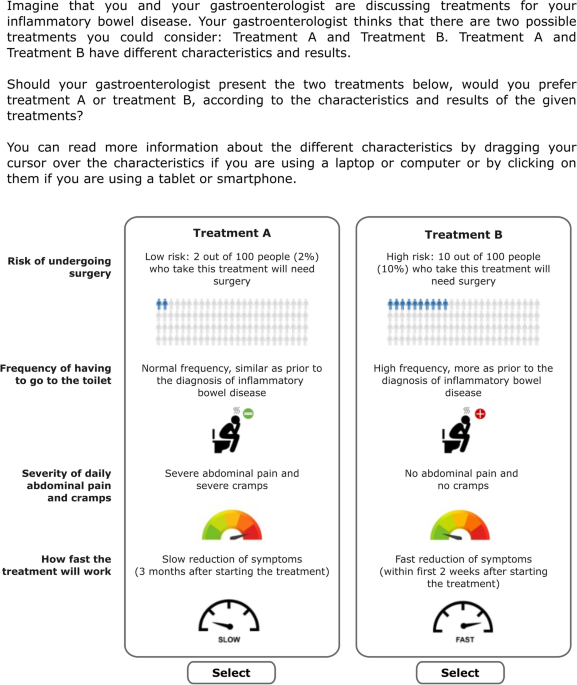
This global survey shows that people with IBD prioritize symptom relief and psychological well-being over treatment features like administration route or speed of onset. That matters for shared decision-making, trial...