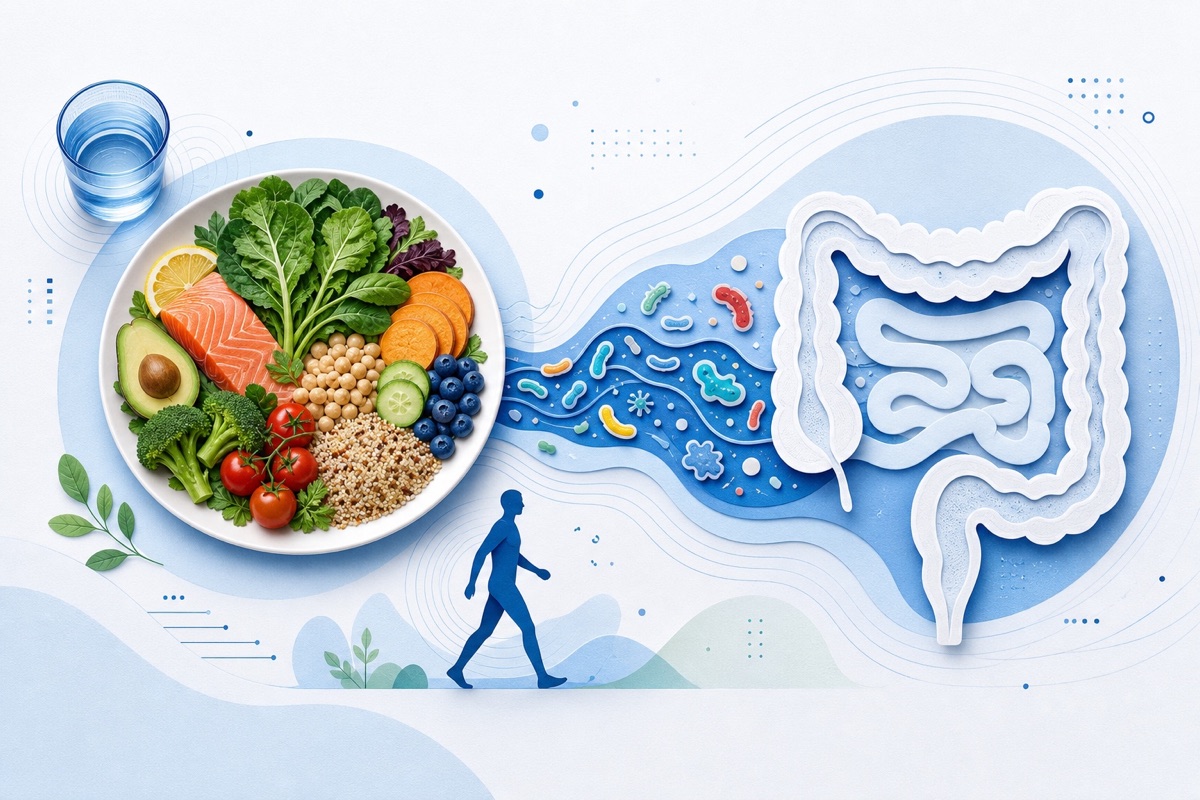
Diet quality was linked to gut microbiome features and exploratory differences in inflammatory markers and symptoms in adults with Crohn disease from Puerto Rico; understanding these links may help tailor dietary approaches for underrepresented populations.
Who Should Pay Attention
Adults with Crohn disease (Puerto Rican or underrepresented groups), clinicians managing IBD, and researchers studying diet–microbiome–inflammation interactions.
Study Snapshot
Story typeResearch paper
Evidence typeResearch paper
Source depthJournal abstract
What To Know
This study assessed diet quality, gut microbiome composition (shotgun metagenomics), inflammatory markers (fecal calprotectin, CRP, a 96‑cytokine panel), and patient-reported outcomes in 60 Puerto Rican adults with Crohn disease in a cross‑sectional analysis performed before a dietary intervention.
Researchers found generally poor diet quality—low fruit, vegetables, whole grains, and fiber; high saturated fat, added sugars, and animal protein—and identified four dietary patterns (vegetable‑rich, dairy‑rich, fruit‑rich, coffee/sweetener‑rich).
Higher overall diet quality and a fruit‑rich pattern were linked to greater gut microbial diversity and, in exploratory analyses, to lower fecal calprotectin and CRP; vegetable‑rich pattern related to better quality of life, while coffee/sweetener‑rich related to worse symptoms.
These associations did not remain statistically significant after false discovery rate correction, and most participants were in clinical remission despite impaired health‑related quality of life. The authors conclude larger longitudinal studies in underrepresented populations are needed to test whether improving diet alters disease outcomes.
Keep In Mind
Cross‑sectional design and small sample size limit causal inference. Associations did not remain significant after false discovery rate correction; results are hypothesis‑generating and need confirmation in larger longitudinal or interventional studies.
Source Details
Review the original publication for the complete reporting, methods, and context.
Research paperEvidence type derived from source or registry metadata.
PublicationInflammatory bowel diseases
AuthorsLymarie M Díaz-Díaz, Lianeris Estremera-Rodriguez, Mayra Rojas-Correa +10 more
InstitutionDepartment of Microbiology, Program of Microbiome Dynamics, University of Massachusetts Chan Medical School, Worcester, MA 01655, United States.
This Cure8 brief is based on source text from the linked article. Cure8 is informational only and is not a substitute for professional medical advice, diagnosis, or treatment.
This study suggests that higher intake of specific fibers (beta‑glucan and inulin) may be linked to lower Crohn’s risk in people with a family history, and it connects those fibers to biomarkers of inflammation, barrier...
Diet is a modifiable factor that may influence inflammation and the gut microbiome. If the Mediterranean diet is linked with lower disease activity and inflammatory markers in newly diagnosed Crohn’s disease, patients...
If you have Crohn’s disease, this study suggests following a Mediterranean-style diet may be linked with lower inflammation and a gentler disease course, and it could positively change the gut microbiome and metabolites.