![Differential Effects of the Apelin Receptor Blockade by [Ala13]-Apelin-13 on Colonic Barrier Integrity and Hepatic Inflammatory Responses in Chemically Induced Colitis](https://media.springernature.com/m685/springer-static/image/art%3A10.1007%2Fs44411-026-00827-4/MediaObjects/44411_2026_827_Figa_HTML.png)

Bratislavské lekárske listy/Bratislava medical journal
Cure8 research brief
Cure8 research brief
This study explores a potential target (the apelin receptor) that may affect intestinal barrier health in inflammatory bowel disease, which is relevant because barrier dysfunction contributes to flares and systemic complications. However, findings come from a rat model and not from clinical trials in patients.
Researchers studying IBD mechanisms or new therapeutic targets, translational scientists interested in the gut–liver axis, and clinicians following emerging preclinical IBD research.
This preclinical rodent study tested pharmacologic blockade of the apelin receptor (APJ) using [Ala13]-apelin-13 (F13A) in TNBS-induced colitis.
F13A given intravenously for 3 days after colitis induction reduced colonic injury and preserved markers of barrier integrity (ZO‑1 expression, mucus, PGE2) but produced only partial improvement in liver inflammation markers.
The work is basic/mechanistic and uses an experimental chemical colitis model in rats; it does not report clinical results in people with IBD. It suggests APJ signaling has tissue-specific roles during intestinal inflammation and that blocking APJ may protect gut barrier function while having limited effects on associated hepatic inflammation.
Future studies the authors note should test other APJ-targeting approaches and investigate mechanisms more deeply before considering translation to human studies.
The article reports an animal experiment (TNBS-induced colitis in rats) and is a basic-science study; results do not translate directly to patient care. The structured content depth is an abstract, so the brief is grounded in the provided abstract rather than a full peer-reviewed clinical dataset.
Review the original publication for the complete reporting, methods, and context.
This Cure8 brief is based on source text from the linked article. Cure8 is informational only and is not a substitute for professional medical advice, diagnosis, or treatment.
This study identifies a plant-derived polysaccharide (from the stem of Dendrobium huoshanense) that reduced inflammation and tissue injury in a mouse model of ulcerative colitis and points to GLP-1 signaling as a likely...
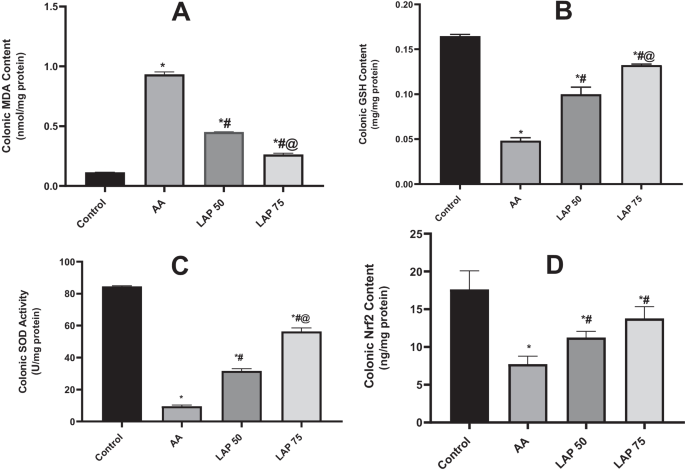
This study suggests the cancer drug lapatinib reduced colon damage and liver changes in a rat model of chemical colitis, which could point to new research directions for IBD treatments or gut–liver injury mechanisms.
The study identifies a new macrophage-driven immune pathway (VDAC1-mediated mtDNA release activating cGAS–STING) that contributes to ulcerative colitis in preclinical models and suggests a plant-derived compound (SEI)...