Pharmaceutics
Cure8 research brief
Cure8 research brief
If true, using infliximab drug-level modeling plus routine blood tests could help predict who has mucosal healing without immediate endoscopy, potentially reducing invasive procedures and improving monitoring for people on IFX.
Patients on infliximab or other anti-TNF therapy, gastroenterologists and IBD clinicians, clinical pharmacologists and researchers studying therapeutic-drug-monitoring and biomarkers for IBD.
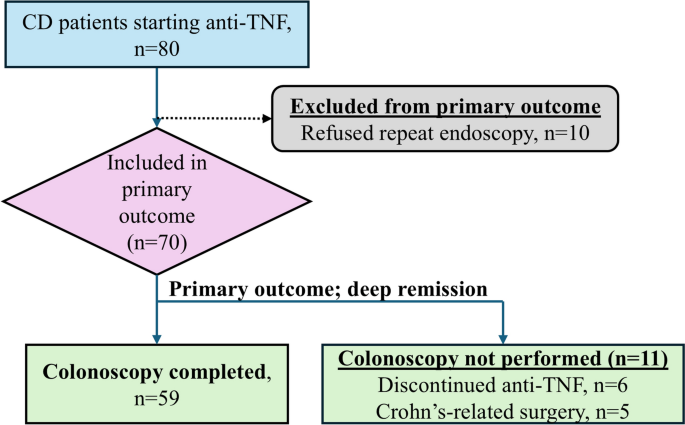
This study analyzed real-world data to see whether infliximab pharmacokinetics (specifically estimated drug clearance) and routine blood biomarkers can predict mucosal healing (MH) in people with inflammatory bowel disease.
The authors used population PK modeling (NONMEM) to estimate individual IFX clearance, correlated those parameters with endoscopic findings, and ran logistic regression and ROC analyses to identify predictors.
Key findings reported were that higher IFX clearance was associated with lower probability of achieving MH, and that leukocyte and platelet counts showed discriminatory ability; a combined model with IFX clearance and platelet count performed best in multivariable analysis.
The authors suggest that TDM-derived parameters together with simple blood tests could help reduce reliance on repeated endoscopies. This brief is grounded in the article abstract provided; Cure8 did not review the full paper beyond the source text supplied here.
This report is a single-center, retrospective real‑world study that used model-based estimates of IFX clearance rather than prospective randomized data. Findings should be confirmed in larger, multicenter or prospective studies before changing clinical practice.
Therapeutic-drug-monitoring methods and model implementations can vary between centers, which affects generalizability.
Review the original publication for the complete reporting, methods, and context.
This Cure8 brief is based on source text from the linked article. Cure8 is informational only and is not a substitute for professional medical advice, diagnosis, or treatment.
Faster remission can reduce symptoms, school disruption, and steroid exposure for children with IBD. If earlier infliximab level checks reliably speed remission, clinicians could adjust dosing sooner to improve outcomes.
The study identifies specific induction exposure targets and biomarkers tied to higher chances of deep remission at 12 months in children on anti-TNF therapy, which could inform earlier dose optimization to improve...
Identifies candidate drug‑level and immune biomarker cut‑points linked with endoscopic healing in pediatric Crohn's disease, which could help guide dosing or treatment changes if validated.