Evaluation of pharmacokinetic metrics and pharmacodynamic biomarkers associated with endoscopic healing in pediatric Crohn's disease patients treated with anti-tumor necrosis factor biologics.
Identifies candidate drug‑level and immune biomarker cut‑points linked with endoscopic healing in pediatric Crohn's disease, which could help guide dosing or treatment changes if validated.
Who Should Pay Attention
Pediatric patients with Crohn's disease and their caregivers, gastroenterology clinicians who manage biologic dosing, and researchers studying biomarkers and therapeutic drug monitoring in IBD.
Study Snapshot
Story typeResearch paper
Evidence typeResearch paper
Source depthJournal abstract
What To Know
This study enrolled children and young adults (1–22 years) on infliximab or adalimumab for >6 months who underwent ileocolonoscopy. Endoscopic healing was defined as SES‑CD < 3 and was present in about 55% of participants.
The investigators found that several CD64 biomarkers (neutrophil CD64, monocyte CD64, soluble CD64) were lower in patients with endoscopic healing and reported candidate cut‑points for each. There was no mean difference in trough concentrations of infliximab or adalimumab between groups, but infliximab clearance was higher in patients without healing.
A multivariable model for infliximab patients combining PK (clearance) and PD (platelets, albumin) predicted endoscopic healing with high AUC in this dataset.
If validated, these PK/PD cut‑points and the model could help clinicians decide when to escalate dose (for PK failure) or change therapy (for PD failure); this study reports associations and candidate thresholds rather than proving clinical benefit.
Keep In Mind
This is a cross‑sectional clinical study (abstract-level summary). Reported cut‑points and the multivariable model are preliminary and need external validation before being used to guide clinical care.
Source Details
Review the original publication for the complete reporting, methods, and context.
This Cure8 brief is based on source text from the linked article. Cure8 is informational only and is not a substitute for professional medical advice, diagnosis, or treatment.
Researchers and clinicians are increasingly studying combinations of IBD drugs because single‑drug remission rates have plateaued; dual therapy may improve outcomes for patients who have failed prior treatments.
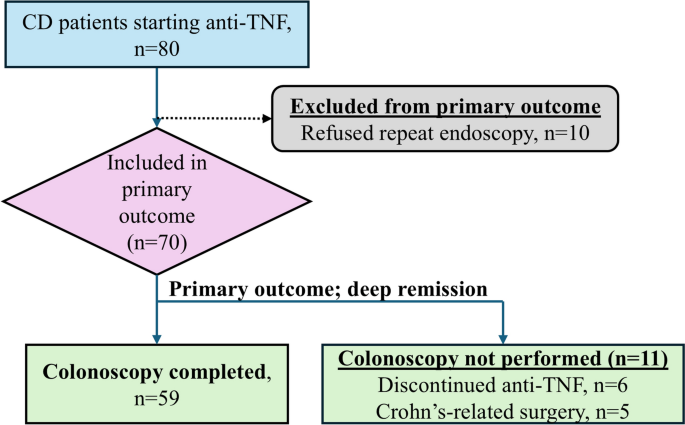
The study identifies specific induction exposure targets and biomarkers tied to higher chances of deep remission at 12 months in children on anti-TNF therapy, which could inform earlier dose optimization to improve...
This report outlines which drugs and companies are shaping Crohn’s disease treatment options and predicts market shifts that may affect treatment availability, costs, and future therapy choices.