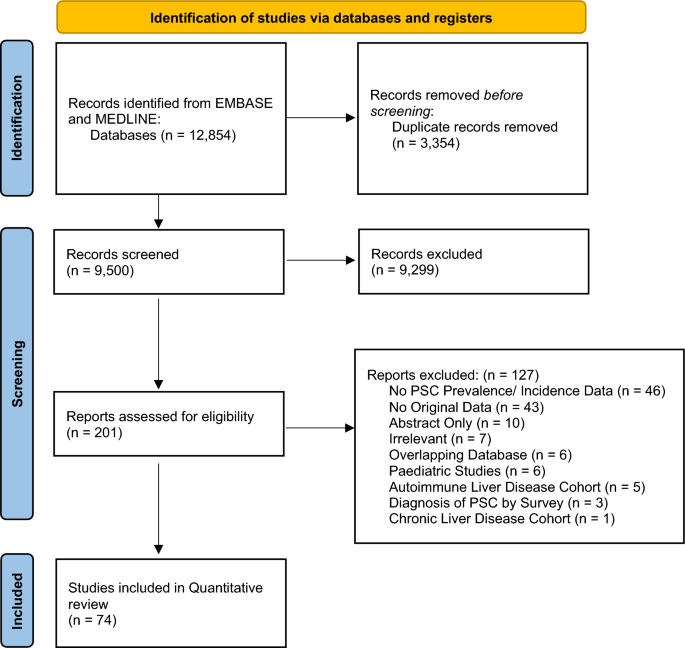
PSC is rare in the general population but substantially more common in people with IBD, particularly ulcerative colitis, and it raises long-term hepatobiliary risks including cholangiocarcinoma—so knowing how often PSC occurs helps clinicians and patients weigh surveillance and referral decisions.
Who Should Pay Attention
Adults with IBD (especially ulcerative colitis), gastroenterologists, hepatologists, epidemiologists and researchers studying IBD-related liver disease, and clinicians involved in IBD surveillance programs.
Study Snapshot
Story typeResearch paper
Evidence typeResearch paper
Source depthJournal abstract
What To Know
The study pooled data from population- and cohort-based studies to estimate PSC prevalence and incidence. In the general population the pooled prevalence was reported as about 8 per 100,000; among people with IBD the pooled prevalence was about 15.2 per 1,000, higher in ulcerative colitis than Crohn’s disease.
The authors also report a pooled incidence in the general population and emphasize wide heterogeneity across regions and study methods. The paper underscores gaps in data from lower-resource regions and calls for standardized case definitions and improved surveillance.
Because PSC carries a markedly increased risk of cholangiocarcinoma, the findings reinforce the importance of awareness and targeted evaluation in higher-risk IBD patients.
Keep In Mind
Estimates come from pooled population- and cohort-based studies up to October 2025; the abstract notes substantial geographic and methodological heterogeneity and underrepresentation of low-SDI regions, so pooled numbers should be interpreted with caution for under-sampled settings.
Source Details
Review the original publication for the complete reporting, methods, and context.
This Cure8 brief is based on source text from the linked article. Cure8 is informational only and is not a substitute for professional medical advice, diagnosis, or treatment.
This meta-analysis suggests people with IBD—especially those with Crohn’s disease—have a modestly increased risk of stroke. That makes cardiovascular risk assessment and prevention potentially more important for people...
People with celiac disease may have higher risks for several digestive cancers and for inflammatory bowel diseases (Crohn’s and UC) according to this large French cohort study. Knowing these associations can help...
Skin disease (hidradenitis suppurativa) may be more common in people with IBD—particularly Crohn disease—and could be linked with more severe intestinal complications. Awareness can prompt coordinated care between...