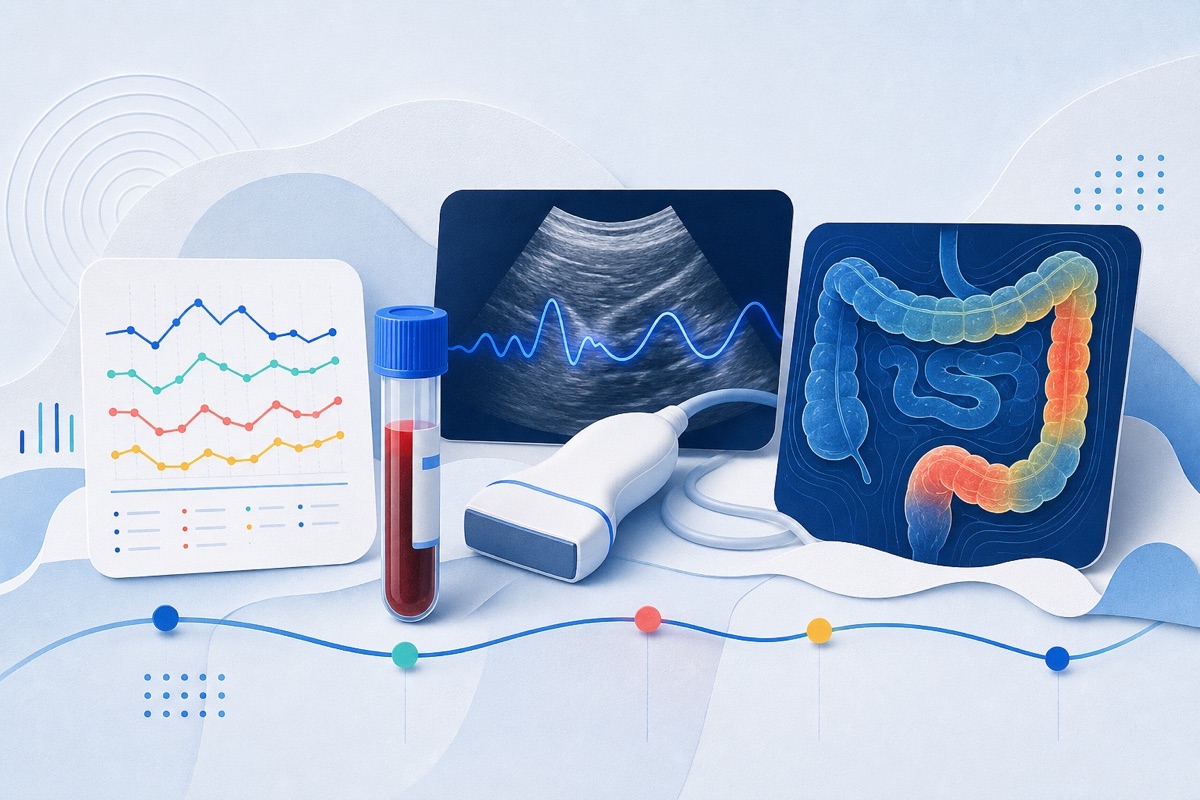
If a panenteric capsule can replace colonoscopy plus small-bowel imaging for initial diagnosis, it could offer a less invasive, single-test pathway for many people suspected of having Crohn's disease. That may reduce the need for multiple tests and speed diagnosis for younger adults.
Who Should Pay Attention
Adults (18–40) with new or suspected Crohn's disease, gastroenterologists and endoscopists, IBD researchers, and patients interested in less invasive diagnostic options.
Study Snapshot
Story typeClinical Reference
Trial phaseNA
Enrollment165 participants
Study statusRecruiting
Source depthTrial registry record
What To Know
This registered interventional study is testing whether a single panenteric capsule endoscopy (camera pill) can provide a complete diagnostic assessment for people 18–40 years old with suspected Crohn's disease, compared with the traditional pathway of colonoscopy plus a small-bowel exam (MRI enterography or small-bowel capsule).
The trial will measure whether the initial test(s) yield a complete gastrointestinal assessment and an unambiguous diagnosis without needing supplementary exams.
Participants are randomized to either a minimally invasive diagnostic algorithm using panenteric capsule endoscopy or to the traditional work-up (ileocolonoscopy plus MRI enterography or small-bowel capsule).
Key eligibility requirements include clinical suspicion of Crohn's disease and elevated fecal calprotectin or supportive inflammatory markers; people with prior intestinal resection, active suspected bowel obstruction, pregnancy, or certain positive infectious/serologic tests are excluded.
The study is recruiting in Denmark and Sweden with a planned enrollment of 165. This is a trial record (interventional) registered on ClinicalTrials.gov; it reports design, interventions, primary outcome (diagnostic completeness), and inclusion/exclusion criteria but does not present results.
Keep In Mind
This is a registered interventional study that is currently recruiting and does not report outcomes. The record describes planned methods and eligibility; it is not a peer-reviewed result. The trial focuses on diagnostic completeness immediately after the initial procedure(s) rather than long-term outcomes.
Source Details
Review the original publication for the complete reporting, methods, and context.
This Cure8 brief is based on source text from the linked article. Cure8 is informational only and is not a substitute for professional medical advice, diagnosis, or treatment.
The study will test whether routine point‑of‑care intestinal ultrasound changes clinical decisions compared with standard monitoring, which could make monitoring less invasive and more responsive if effective.
People with IBD who have no or few symptoms but still have moderate–severe inflammation on endoscopy face uncertainty about whether to switch therapies to aim for endoscopic remission.
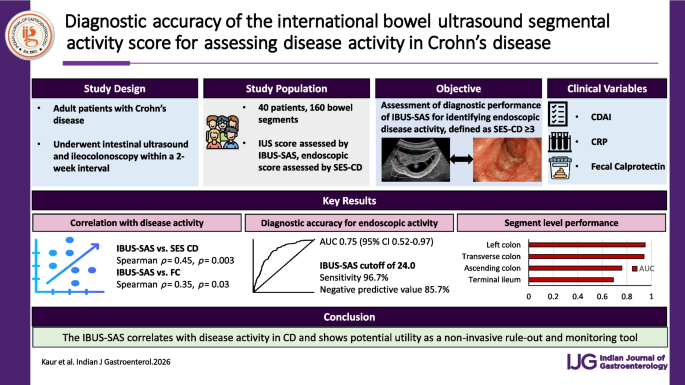
Standardized intestinal ultrasound scoring could help non-invasively monitor Crohn’s disease activity and reduce reliance on colonoscopy for some assessments. A high-sensitivity IUS score may be useful to rule out...