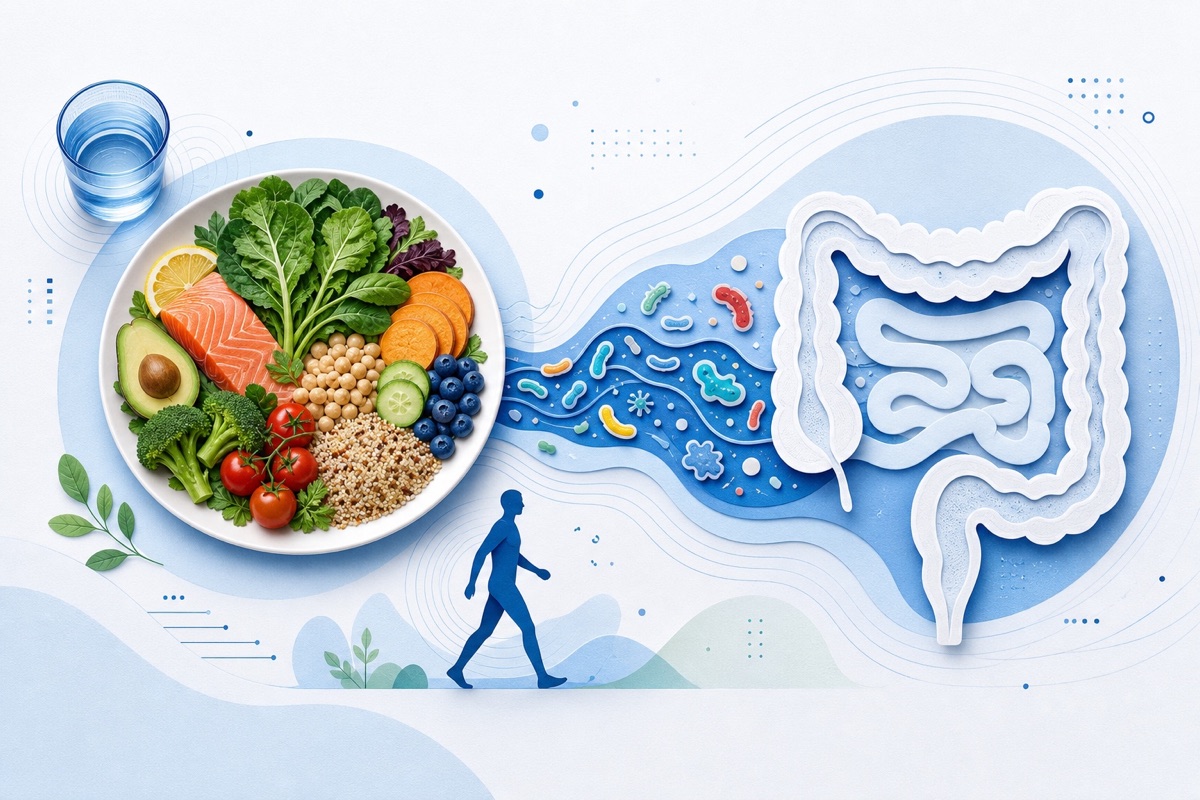
The study suggests that combining different fermentable fibers may steer the gut microbiome toward more butyrate-producing bacteria and away from pro-inflammatory lineages—changes that could be relevant to IBD-related dysbiosis if confirmed in humans.
Who Should Pay Attention
Patients with IBD interested in diet-based microbiome approaches, clinicians advising on nutrition, and researchers studying dietary fibers and the gut microbiome.
Study Snapshot
Story typeResearch paper
Evidence typeResearch paper
Source depthJournal abstract
What To Know
The work was done in a controlled laboratory fermentation system using fecal samples from two people over 48 hours, not in living humans. That means the results show how microbes respond to different fibers in vitro, which is useful for understanding mechanisms and designing dietary strategies but does not prove clinical benefit for people with IBD.
If you have IBD and are curious about fiber, this paper supports the idea that diverse, fermentable fibers may promote beneficial microbes (including butyrate producers) and reduce pro-inflammatory taxa in model systems. It does not provide dosing, safety, or treatment guidance for patients.
For clinicians and researchers, the study suggests composite fiber blends could be a promising area for future clinical trials testing microbiome-targeted dietary interventions in IBD.
Keep In Mind
This is an in vitro pilot study using fecal fermentation from two donors; findings are mechanistic and hypothesis-generating. Results need confirmation in human clinical studies before they can be translated into treatment or dietary recommendations for people with IBD.
Source Details
Review the original publication for the complete reporting, methods, and context.
This Cure8 brief is based on source text from the linked article. Cure8 is informational only and is not a substitute for professional medical advice, diagnosis, or treatment.
People with IBD often receive general advice to eat more fiber, but certain purified fibers or fiber-enriched foods may help some people while worsening inflammation in others. Research that teases apart fiber types and...
The study identifies a specific polysaccharide fraction (VPS-30) that reduced inflammation and improved gut barrier markers in cell and mouse models of colitis, suggesting a possible new functional-food lead for...
If you or your clinician are considering dietary therapy like the CDED for Crohn's disease, microbiome features at baseline may influence who achieves sustained remission. Understanding these links could help personalize...