Biomedicines
Cure8 research brief
Cure8 research brief
Biomarker discordance is common in treat-to-target IBD care; understanding which tests reflect local gut inflammation versus systemic response can help avoid unnecessary treatment changes and guide targeted investigation.
The review highlights which biomarkers are well-established (FC, CRP) versus investigational, and notes when therapeutic drug monitoring may be useful.
Clinicians managing IBD, gastroenterology researchers, patients on biologics or being monitored with fecal calprotectin/CRP, and multidisciplinary care teams involved in IBD monitoring.
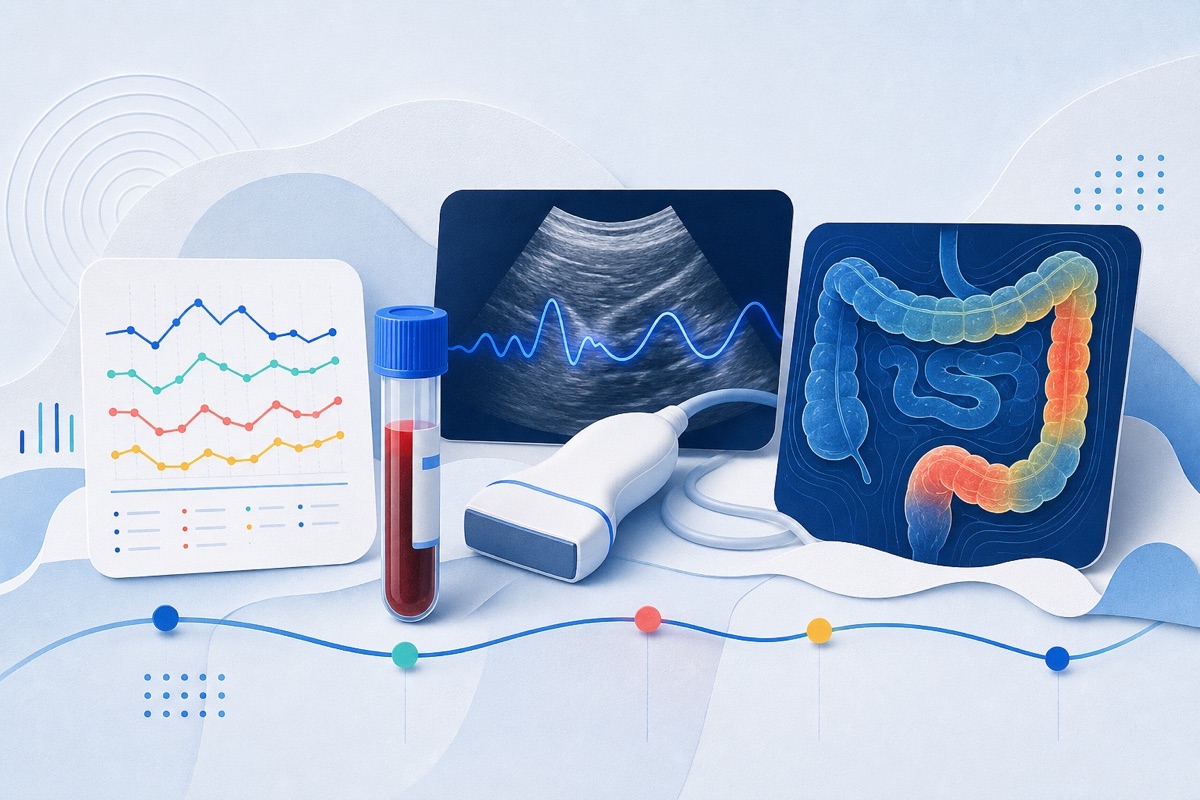
The review emphasizes that fecal calprotectin and lactoferrin signal neutrophil-driven intestinal inflammation, while CRP and related serum markers indicate a systemic inflammatory response; other markers (FIT, LRG, epithelial/repair, and matrix-turnover markers) are discussed but remain investigational or insufficiently standardized.
The authors propose five biomarker domains (fecal–neutrophil; serum–systemic; epithelial/barrier; restitution/resolution; fibrosis/ECM remodeling) and recommend assessing sampling, assay, timing, infection, medication confounding, and pretest probability when biomarkers disagree.
They note that reactive TDM for anti-TNF agents has the most mature evidence and that exposure–response for vedolizumab and ustekinumab exists but lacks validated actionable thresholds.
The review warns against making treatment changes based on a single discordant biomarker alone and frames the framework as hypothesis-generating rather than a validated algorithm.
Structured-review content is presented as a narrative synthesis (abstract available). The framework is not a validated clinical algorithm; many markers (LRG, matrix-turnover, barrier/repair markers) remain investigational or lack standardization. Reactive TDM evidence is strongest for anti-TNF agents; thresholds for newer biologics and small molecules are unvalidated.
Review the original publication for the complete reporting, methods, and context.
This Cure8 brief is based on source text from the linked article. Cure8 is informational only and is not a substitute for professional medical advice, diagnosis, or treatment.
Patients considering switching biologics or clinicians choosing a second‑line therapy may care because the study suggests ustekinumab had better long‑term persistence and improving remission rates compared with anti‑TNF...
Early changes in stool tests (qFIT and fecal calprotectin) might help predict which biologic‑naive ulcerative colitis patients will relapse or need escalation to biologic/JAK therapy. If validated, such markers could...
Measuring mucosal healing across the whole gut with stool markers, ultrasound, and capsule endoscopy may give a clearer picture of whether biologic treatment is working and help guide decisions about continuing or...