If epithelial cells keep lasting "memories" of past inflammation or microbial signals, that could help explain why some people with IBD have persistent barrier dysfunction, relapses, or incomplete mucosal recovery even after inflammation appears controlled.
Understanding these mechanisms could point to new therapeutic or prevention strategies.
Who Should Pay Attention
Researchers studying mucosal immunology, epithelial biology, microbiome–host interactions, and IBD pathogenesis; clinicians interested in mechanisms behind relapse-prone disease or incomplete mucosal healing; translational scientists exploring epigenetic or metabolite-targeted therapies.
Study Snapshot
Story typeResearch paper
Evidence typeResearch paper
Source depthJournal abstract
What To Know
The article summarizes evidence that intestinal stem and progenitor cells can acquire durable changes in chromatin accessibility, transcriptional responsiveness, lineage choices, and metabolism after inflammatory or microbial exposures.
Human organoid work and mouse colitis models are cited as showing epigenetic "imprints" that persist after acute inflammation and can alter repair or tumor-prone states.
The review also highlights microbiota-derived metabolites (for example, butyrate) as possible persistent cues that shape epithelial metabolism and epigenetics and influence downstream IL-10+ CD4+ T cell responses that support immune tolerance.
The authors propose that restoring lasting intestinal health may require addressing epithelial memory, not only suppressing active inflammation. This is a conceptual, review-style paper summarizing mechanistic and translational research rather than reporting a single new clinical trial or patient intervention.
Keep In Mind
This article is a review (structured abstract available) that synthesizes findings from organoid studies, mouse colitis models, and mechanistic work on metabolites like butyrate. It discusses hypotheses and emerging data rather than presenting a single clinical trial with patient outcomes. Translational implications are still exploratory.
Source Details
Review the original publication for the complete reporting, methods, and context.
This Cure8 brief is based on source text from the linked article. Cure8 is informational only and is not a substitute for professional medical advice, diagnosis, or treatment.
People with ulcerative colitis may be interested because the study suggests a combined probiotic approach could strengthen gut bacteria functions linked to a protective metabolite (spermidine) and reduce colitis-like...
If you have PSC-IBD or care for someone who does, this study suggests the gut microbiota and its ability to make secondary bile acids may help drive inflammation and colorectal dysplasia risk.
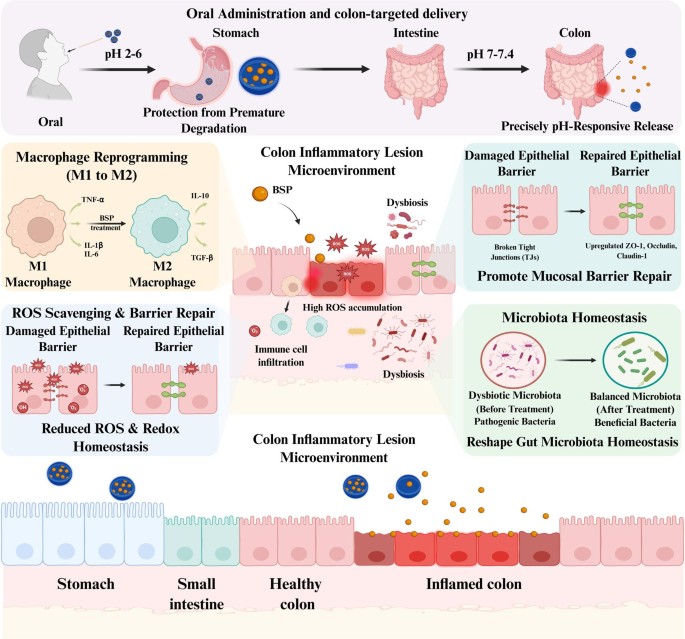
The study describes a new oral, colon‑targeted delivery system that improved outcomes in a mouse model of ulcerative colitis and shifted immune and microbiome markers—research that could inform future therapies focused...