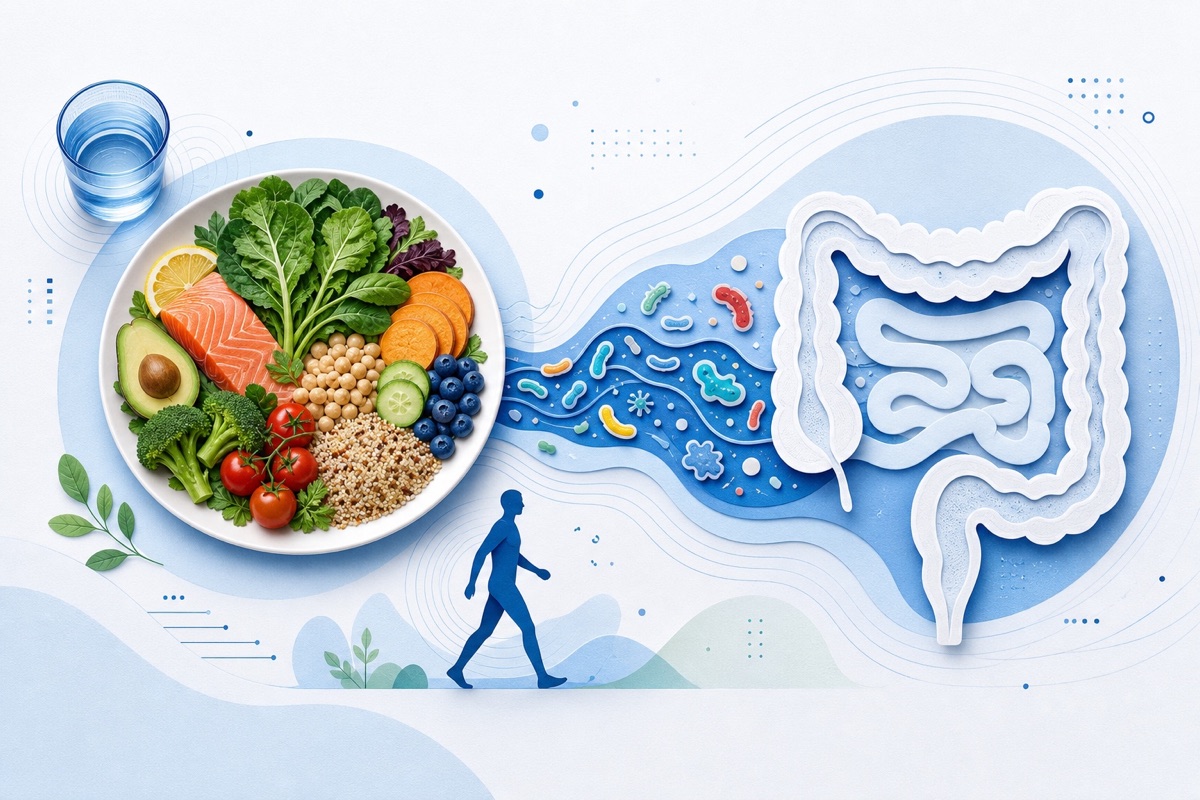
Dietary strategies such as the Crohn’s Disease Exclusion Diet (CDED) may help induce remission for some people with Crohn’s disease and could be an option alongside medical therapy or enteral nutrition. Patients interested in non-pharmacologic approaches or reducing steroid use may find these results relevant.
Who Should Pay Attention
Adult patients with Crohn’s disease, caregivers, gastroenterologists, IBD dietitians, and researchers studying dietary therapies for IBD.
Study Snapshot
Story typeResearch paper
Evidence typeResearch paper
Source depthJournal abstract
What To Know
This paper is a systematic review and meta-analysis of studies testing the Crohn’s Disease Exclusion Diet (CDED), alone or combined with partial or exclusive enteral nutrition, for induction and maintenance of remission in Crohn’s disease.
The pooled results reported by the authors found higher odds of achieving clinical remission with CDED-based interventions versus control diets, with pooled short-term (6–8 week) remission rates around two-thirds to three-quarters depending on the subgroup. Maintenance-remission rates were lower and more variable across studies.
The authors note limited data on biochemical, endoscopic, transmural, and histologic outcomes and call for well-designed randomized trials.
What this means practically CDED appears promising as a whole-food dietary strategy to induce remission in some people with Crohn’s disease based on pooled trial and observational data, but evidence gaps remain—especially for longer-term maintenance and objective healing measures.
Discussing diet options with your IBD clinician or dietitian is reasonable if you’re considering CDED, and it may be used alongside enteral nutrition in some protocols. Evidence basis and limits This brief is based on the article abstract (systematic review and meta-analysis) published in Alimentary Pharmacology & Therapeutics.
The source reports pooled clinical outcomes but limited objective endpoint data and calls for further randomized trials.
Keep In Mind
The article is a systematic review and meta-analysis (abstract available). The authors report pooled clinical-remission and maintenance outcomes but note limited data on biochemical, endoscopic, and histologic endpoints and recommend more well-designed randomized trials. This summary is grounded in the published abstract and does not represent a full-text review.
Source Details
Review the original publication for the complete reporting, methods, and context.
This Cure8 brief is based on source text from the linked article. Cure8 is informational only and is not a substitute for professional medical advice, diagnosis, or treatment.
Adding structured partial enteral nutrition to advanced drug therapy could offer a non-pharmacologic way to improve short-term, steroid-free remission rates in active Crohn's disease if the trial shows benefit.
Dietary patterns may differ between people who develop Crohn’s disease or ulcerative colitis and their healthy relatives; understanding these associations could help guide prevention research and personalized nutrition...
Diet is a common concern for people with Crohn’s disease, and this randomized trial suggests a structured, short-term calorie-restricted diet may reduce symptoms and markers of gut inflammation. Evidence-based dietary...