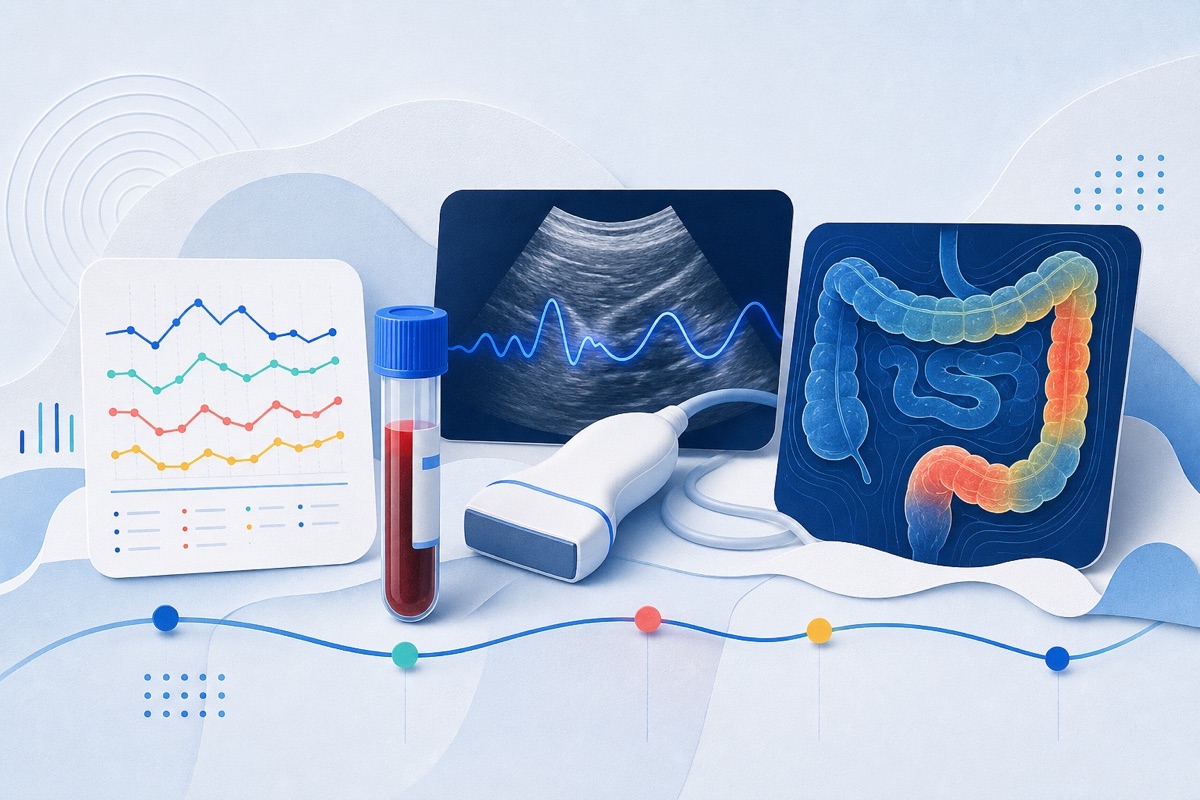
Automated, validated grading of UC on colonoscopy images could reduce variability between endoscopists and help standardize severity assessment that influences treatment planning.
Who Should Pay Attention
Clinicians who perform or interpret colonoscopy for UC, researchers in medical imaging/AI, and patients interested in advances that could standardize disease monitoring.
Study Snapshot
Story typeResearch paper
Evidence typeResearch paper
Source depthJournal abstract
What To Know
The study developed and optimized a ResNet50 convolutional neural network using retrospective colonoscopy images from one center and then externally validated it on images from two other tertiary hospitals. Reported performance metrics include sensitivity, specificity, AUC, and agreement measures versus expert endoscopists.
The authors conclude the model performed comparably to experienced clinicians and showed good generalizability across centers. How this might be used: The system is presented as an aid for endoscopic grading of UC severity during colonoscopy reporting or centralized image review, potentially reducing inter-observer variability.
Next steps and limits: This report is an externally validated clinical study presented as a preprint/posted content with structured-abstract level detail. Additional prospective clinical testing, integration into endoscopy workflows, and assessment of impact on clinical decisions and patient outcomes would be needed before routine clinical use.
Keep In Mind
This is posted content with abstract-level structured detail and external validation on retrospective multi-center image sets; it is not a prospective clinical deployment study and does not report patient-outcome effects.
Source Details
Review the original publication for the complete reporting, methods, and context.
This Cure8 brief is based on source text from the linked article. Cure8 is informational only and is not a substitute for professional medical advice, diagnosis, or treatment.
People with IBD have a higher lifetime risk of colorectal cancer; updated UK guidelines give clinicians and patients evidence-based recommendations on when and how to do surveillance colonoscopy to detect precancerous...
If confirmed, an endocytoscopic appearance that corresponds to a specific miRNA and chemokine pattern could help clinicians assess mucosal inflammation during colonoscopy and prioritize biopsies or treatment decisions...
The study connects a bothersome UC symptom (bowel urgency) to intestinal ultrasound signs of transmural inflammation, suggesting ultrasound might help explain and track symptom-related inflammation without relying solely...