
coloproctology
Cure8 research brief
Cure8 research brief
Perianal Crohn’s disease causes major symptoms and affects long-term outcomes; understanding surgical options and the role of combined medical–surgical care can help patients and clinicians plan treatment. The review highlights key diagnostics and factors that influence surgical success.
Patients with perianal Crohn’s disease, caregivers, colorectal surgeons, and gastroenterologists.
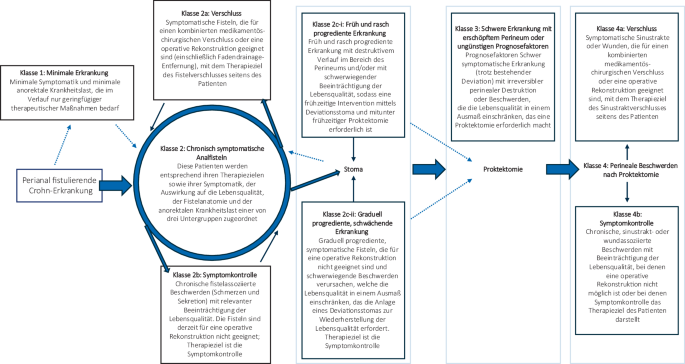
This article is a proctosurgical review of perianal Crohn’s disease focusing on diagnosis and surgical management. It emphasizes exam under anaesthesia and pelvic MRI for mapping, and highlights the TOPClass classification for planning.
Surgical options discussed include draining setons and other sphincter-sparing procedures, plus stoma or proctectomy for refractory cases; combined surgical and medical care is presented as superior to isolated approaches.
The review stresses sepsis control and sphincter preservation as key goals, notes active proctitis as a poor prognostic factor for reconstruction, and flags rare malignant transformation risk in long-standing fistula disease. Special situations such as rectovaginal fistulas and flap reconstructions are mentioned.
Preview/abstract is available publicly but full text may require institutional access. The article is a surgical review summarizing current practices and guideline recommendations rather than reporting a single new trial.
Review the original publication for the complete reporting, methods, and context.
This Cure8 brief is based on source text from the linked article. Cure8 is informational only and is not a substitute for professional medical advice, diagnosis, or treatment.
If your Crohn’s gets worse, your care plan may change — from new medicines to nutritional support or surgery — and this article summarizes common steps doctors take to prevent complications and control inflammation.
If surgeons can safely perform a primary bowel reconnection when they encounter an intra-abdominal abscess during Crohn surgery, some patients may avoid a temporary stoma and its associated morbidity.
Understanding which patients are at higher risk for serious complications after IBD surgery can help patients and clinicians weigh risks, plan preoperative optimization, and guide research into preventive strategies.