Sarizotan ameliorates experimental colitis via anti-inflammatory actions and 5-HT1A receptor-mediated protection against intestinal epithelial apoptosis.
This study identifies sarizotan, a 5-HT1A agonist, as a candidate that reduced inflammation and protected intestinal epithelial cells in mouse and cell models — a potential new approach worth watching for future IBD drug development.
Who Should Pay Attention
Researchers studying IBD drug discovery and epithelial protection, clinicians interested in emerging preclinical therapies, and patients tracking new repurposed drug candidates.
Study Snapshot
Story typeResearch paper
Evidence typeResearch paper
Source depthJournal abstract
What To Know
A lab study (mouse model + cell experiments) tested sarizotan — a 5-HT1A receptor agonist — in DSS-induced colitis and several intestinal cell lines. The drug reduced inflammation, preserved tight junction proteins, and lowered epithelial cell apoptosis in mice and in vitro.
Knocking down the 5-HT1A receptor in epithelial cells removed sarizotan’s anti-apoptotic effect, supporting a receptor-dependent mechanism. These results are preclinical: they show biological effects in animals and cultured cells, not in people with IBD.
Sarizotan has an existing clinical safety record for other uses, which the authors cite when suggesting repurposing for IBD, but clinical trials in people with IBD would be required to know whether it’s safe and effective for this purpose.
If you follow IBD research, this paper is part of early-stage drug-repurposing work that aims to protect the gut lining and reduce inflammation by targeting serotonin (5-HT1A) signaling.
Keep In Mind
These are preclinical findings from animal and cell experiments (structured content depth: abstract). The paper suggests potential for drug repurposing but does not provide human clinical data. Safety and effectiveness for IBD would need testing in clinical trials.
Source Details
Review the original publication for the complete reporting, methods, and context.
This Cure8 brief is based on source text from the linked article. Cure8 is informational only and is not a substitute for professional medical advice, diagnosis, or treatment.
The study suggests a steroid‑sparing combination (low‑dose atorvastatin plus reduced prednisolone) may produce stronger anti‑inflammatory and antioxidant effects than either drug alone in an animal model of ulcerative...
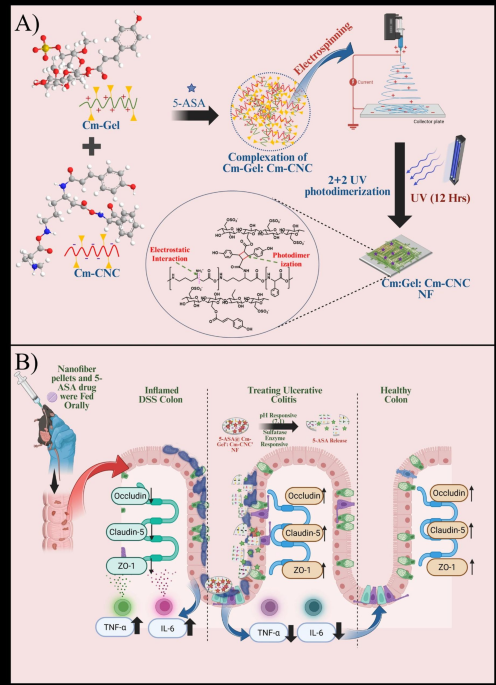
Targeted release of mesalamine to the colon could increase local drug levels and reduce upper-GI exposure and systemic side effects. New delivery platforms may improve effectiveness for ulcerative colitis without...
The paper reports novel ibuprofen-derived compounds that reduce inflammation and restore intestinal immune balance in preclinical models of ulcerative colitis, suggesting a potential new drug-development direction that...