Frontiers in immunology
Cure8 research brief
Cure8 research brief
Identifies genetic and immune-pathway differences that may explain why Behçet's disease shows more intestinal involvement in some populations—insight that could inform research into IBD-like gut inflammation and future targeted therapies.
Researchers studying IBD, Behçet's disease, or immunogenetics; clinicians interested in ethnic differences in disease presentation; translational scientists exploring IL‑1 pathway targets.
The authors compare immunogenetic data across geographic populations to argue that distinct innate immune responses, particularly IL‑1 signaling linked to MEFV variants, could help explain why intestinal Behçet’s is more common in East Asia while vascular forms dominate in other regions.
This is a review article—its conclusions synthesize existing genetic and immunologic studies rather than report new trial results. The review frames these differences as potentially important for tailoring future research and therapeutic strategies, but it does not provide direct clinical recommendations or tested treatment changes.
It is most relevant for researchers and clinicians interested in the genetic overlap and distinctions between IBD and Behçet’s disease.
This is a review article based on existing genetic and immunologic studies (abstract-level content). It synthesizes hypotheses linking population-specific variants (e.g., MEFV) and IL‑1 signaling to phenotypic differences; it does not present new clinical trial data.
Review the original publication for the complete reporting, methods, and context.
This Cure8 brief is based on source text from the linked article. Cure8 is informational only and is not a substitute for professional medical advice, diagnosis, or treatment.
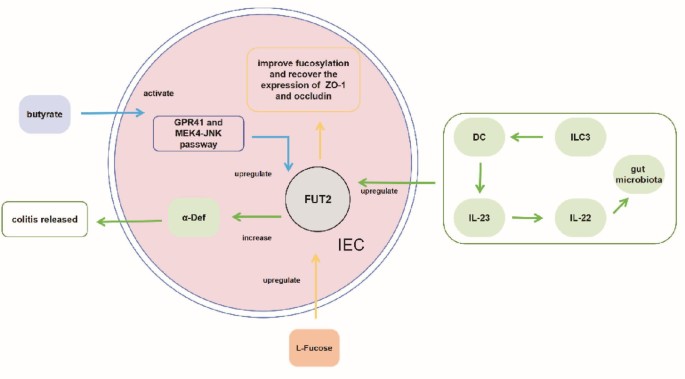
FUT2-mediated fucosylation shapes gut glycans and the microbiome, mechanisms relevant to inflammation and mucosal barrier function in IBD. Understanding these pathways could point to future biomarkers or therapeutic...
The review highlights how microbial metabolites, epigenetic regulation, and mitochondrial metabolism interact to shape inflammation and barrier function in IBD. Understanding these links could help identify new...
The study suggests a plant-derived AHR-activating mechanism that reduced inflammation and repaired the intestinal barrier in preclinical ulcerative colitis models, a pathway that could be relevant to future therapies or...