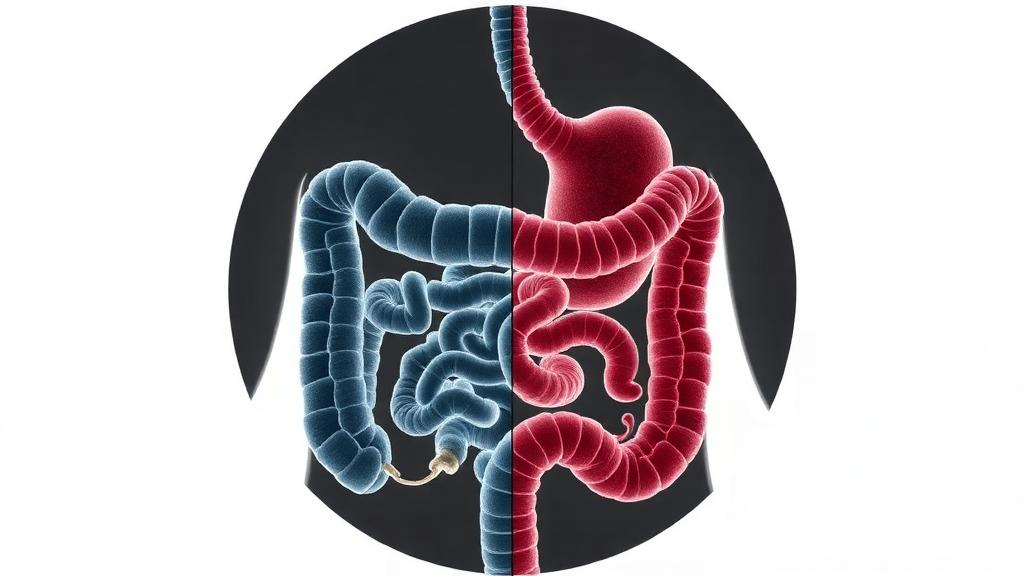
The study suggests IBD patients can fall into two distinct gut-microbe/metabolite types that align with differences in disease severity and mental-health scores, which could help explain why patients with the same diagnosis follow very different courses.
If validated, enterotype-based biomarkers might help stratify patients and guide research into targeted microbiome or metabolite-directed therapies.
Who Should Pay Attention
Patients with Crohn’s disease or ulcerative colitis; gastroenterologists and IBD clinicians; researchers working on the gut microbiome, metabolomics, or biomarkers.
Study Snapshot
Story typeResearch news
Evidence typeClinical study
Source depthFull source text
What To Know
This multi-omics study of 178 IBD patients (104 UC, 74 Crohn’s) and 71 healthy controls used metagenomic sequencing and untargeted metabolomics to identify two distinct enterotypes within the IBD cohort.
One group (GET-B) was enriched for Bacteroidaceae and associated with higher levels of putatively protective metabolites (e.g., secondary bile acids like TUDCA, tryptophan derivatives, butyrate) and milder clinical and psychiatric scores. The other group (GET-E) was enriched for Enterobacteriaceae (including E. coli and K.
pneumoniae), showed lower microbial diversity, higher disease severity and worse anxiety/depression scores, and elevated metabolites such as tyramine.
The authors also trained a random forest classifier on nine bacterial species to distinguish the two enterotypes with high reported accuracy; they propose these enterotypes as a framework linking microbial community structure, metabolite production, and clinical/psychiatric outcomes.
Keep In Mind
Findings are based on cross-sectional associations from a single cohort using metagenomics and untargeted metabolomics; causality and generalisability require replication and longitudinal or interventional studies.
Source Details
Review the original publication for the complete reporting, methods, and context.
Clinical studyArticle type assigned from Cure8 classification; confirm details in the original source.
Publicationbioengineer.org
Indexed viaGoogle News
Source typeWeb article
PublishedOct 5, 2026, 5:44 AM
Content availableFull source text
This Cure8 brief is based on source text from the linked article. Cure8 is informational only and is not a substitute for professional medical advice, diagnosis, or treatment.
This study explores genetic risk variants (NOD2/CARD15) and local environmental factors (khat use) among young adults with IBD in Djibouti — information that may help explain regional differences in Crohn’s disease and...
The study suggests vitamin D might help the immune system tolerate gut bacteria better and lower intestinal inflammation, which could mean fewer symptoms or flares for people with Crohn’s disease or ulcerative colitis.
The report explores NOD2/CARD15 variants in a Djiboutian IBD cohort and suggests higher variant frequencies in Crohn’s disease, which could point to population-specific genetic susceptibility. It also raises khat use as...