webmd.com
Cure8 news brief
Cure8 news brief
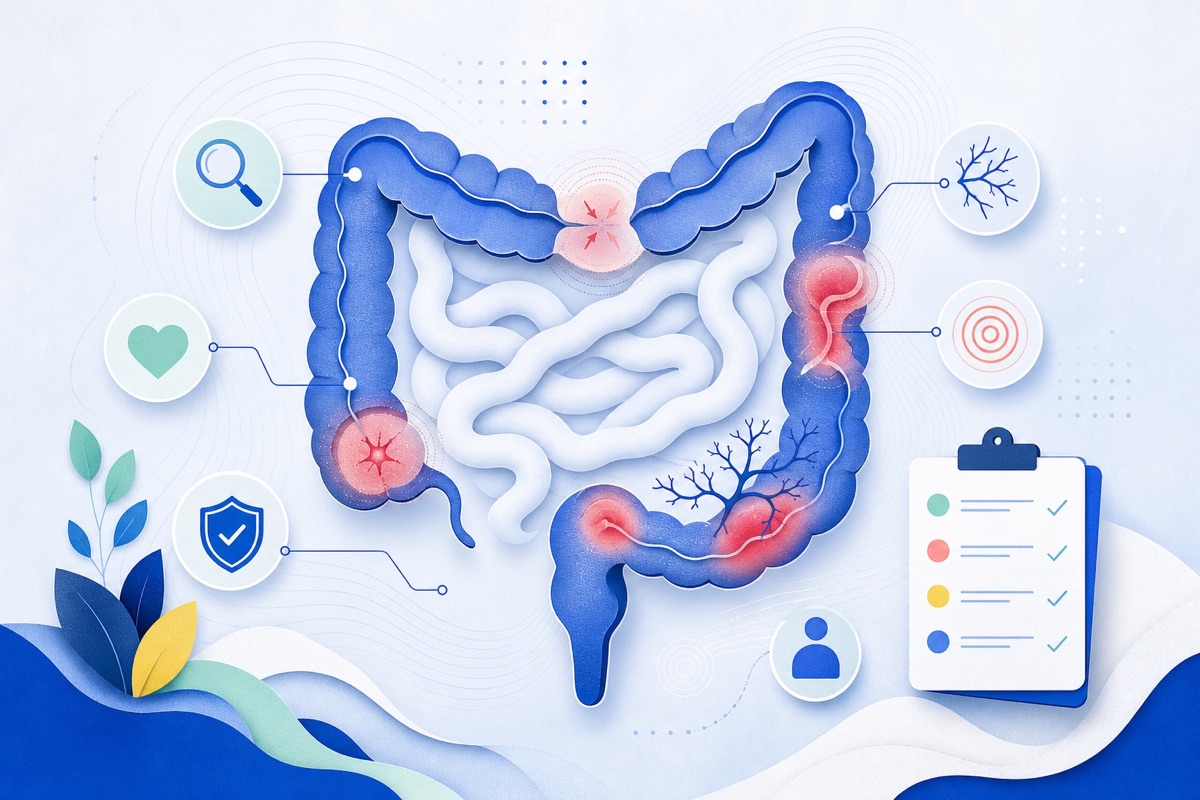
Knowing the type of Crohn’s disease helps explain where symptoms come from and what treatments or procedures might be considered. The article links specific symptoms and complications to each anatomical pattern of disease, which can help patients recognize issues to discuss with their care team.
People with Crohn’s disease, newly diagnosed patients, adult patients managing Crohn’s, and clinicians seeking a patient-facing overview.
This WebMD article explains the five main types of Crohn’s disease defined by where inflammation occurs (ileocolitis, ileitis, gastroduodenal, jejunoileitis, and Crohn’s colitis). It summarizes common symptoms, typical treatments (including steroids, immunomodulators, and anti‑TNF biologics), and complications such as fistulas, abscesses, and strictures.
The piece also notes procedures used for strictures (endoscopic balloon dilation and surgery) and that surgery may be needed when medications and lifestyle changes are insufficient.
If you read the original article, you'll find practical descriptions of symptoms for each Crohn’s type and brief overviews of standard treatment options and possible complications. The article is written for patients and is not reporting new research or trial results; it summarizes established clinical approaches.
Use this as background information about types of Crohn’s disease and what symptoms and treatments are commonly associated with each type, but talk with your clinician for personalized assessment and management.
This is a patient-education overview (WebMD) summarizing standard clinical descriptions and treatment options; it is not new research. Specific treatment choices depend on individual disease severity, location, and complications; the article provides general information rather than personalized medical advice.
Review the original publication for the complete reporting, methods, and context.
This Cure8 brief is based on source text from the linked article. Cure8 is informational only and is not a substitute for professional medical advice, diagnosis, or treatment.
Stomach cramps are a common and often painful part of Crohn’s disease that can signal active inflammation or complications. Understanding causes and management options helps people with Crohn’s recognize when to seek...
The article outlines complications of untreated Crohn’s that can become life threatening (sepsis, perforation, toxic megacolon, severe malnutrition, colorectal cancer). Knowing these risks helps people with Crohn’s...
The article outlines complications that can come from Crohn’s disease, many of which may need tests, medication, or surgery. Knowing these helps you recognize warning signs and talk with your care team about prevention...