This study connects USP25 to NOD2–XIAP signaling and Crohn’s disease genetics, suggesting a possible target for future therapies or biomarkers relevant to IBD pathogenesis.
Who Should Pay Attention
Researchers in IBD genetics and immune signaling; translational clinicians; patients and advocates interested in new molecular targets.
Study Snapshot
Story typeResearch paper
Evidence typeResearch paper
Source depthJournal abstract
What To Know
This abstract reports a lab and mouse study showing that the deubiquitinase enzyme USP25 supports NOD2 signaling by promoting expression and recruitment of XIAP, a protein involved in innate immune signaling. In macrophages, loss of USP25 reduced cytokine responses to muramyl dipeptide (MDP).
In mice, USP25 deficiency worsened chemically induced colitis (TNBS) and caused spontaneous intestinal inflammation with age, while USP25 overexpression ameliorated TNBS colitis. The authors also note that a human IBD-associated SNP reduces USP25 expression and that lower USP25 levels were observed in Crohn’s disease patients.
Keep In Mind
Preclinical cellular and mouse-model data and expression/genetic association are reported; no clinical trials or direct human-treatment evidence are included in the abstract.
Source Details
Review the original publication for the complete reporting, methods, and context.
Conflict statement: Competing interests: The authors declare no competing interests. Ethics: Animal experiments were carried out in accordance with the guidelines and regulations of the Animal Management and Ethics Committee of Wenzhou Medical University and were formally approved (Approval No. wydw2023-0612, wydw2025-0565, and wydw2025-0564). The protocol for the study of clinical samples was reviewed and approved by the Ethics Committee in Clinical Research (ECCR) of the First Affiliated Hospital of Wenzhou Medical University (Approval No: KY2023-R182 and KY2025-R153). All procedures were carried out in full compliance with the ethical principles of the Declaration of Helsinki.
This Cure8 brief is based on source text from the linked article. Cure8 is informational only and is not a substitute for professional medical advice, diagnosis, or treatment.
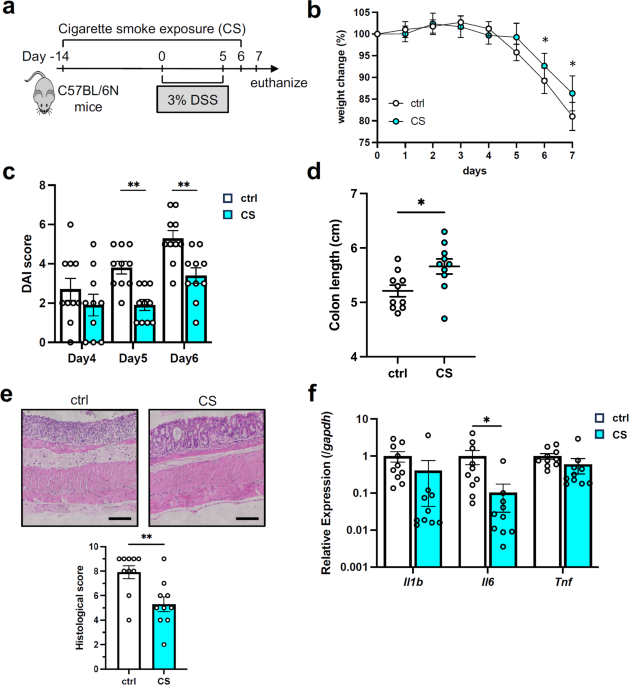
This preclinical study suggests cigarette smoke alters gut microbes and metabolites in ways that can either protect or worsen colitis depending on the model; it identifies 4-HBA as a metabolite that reduced inflammation...
The study links T cell metabolism and epigenetics to inflammation in IBD, highlighting GSK3β as a possible drug target. That could guide future therapies aimed at dampening pathogenic T cells in Crohn’s disease.
The study identifies a specific protein interaction that may underlie persistent inflammation; for people with Crohn’s and other inflammatory conditions this points to a potential new, more targeted treatment approach in...