Researchers are exploring ways to deliver drugs selectively to inflamed gut tissue in IBD to boost local effectiveness and reduce systemic side effects. Progress in smart nanoparticles and hydrogels could eventually change how some anti-inflammatory therapies are given.
However, the review mainly reports preclinical work and technical challenges, so clinical impact for people with Crohn's or ulcerative colitis is not immediate.
Who Should Pay Attention
Researchers and clinicians working on drug delivery, nanomedicine, or IBD therapeutics; patients interested in future targeted therapies and researchers using AI for drug-design.
Study Snapshot
Story typeResearch paper
Evidence typeResearch paper
Source depthJournal abstract
What To Know
This article is an abstract-style review of inflammation-responsive drug delivery systems (IR-DDS) for chronic inflammatory diseases including IBD.
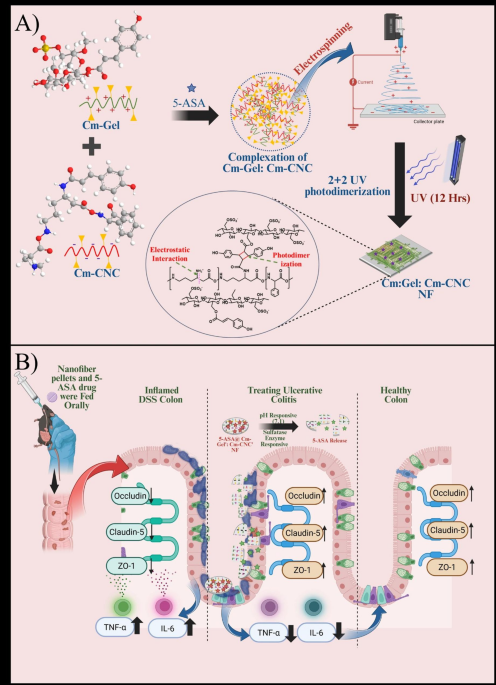
It summarizes stimulus-triggered carrier strategies (pH, ROS, enzymes, GSH) and examples of carriers (polymeric nanoparticles, liposomes, micelles, hydrogels, dendrimers) and highlights preclinical examples such as enzyme-triggered gelatin complexes targeting inflamed gut tissue and a sulfasalazine-loaded patch tested in animal colitis models.
The review emphasizes preclinical promise (reduced cytokines, inflammation markers, improved local efficacy) but notes barriers to clinical translation: disease heterogeneity, scalability, biocompatibility, and manufacturing complexity.
Future directions mentioned include AI-guided multi-stimuli systems and multifunctional nanoparticle hybrids for combined therapy and diagnostic imaging. The abstract-level source does not report human trial results or clinical recommendations; findings are preclinical and technology-focused.
Keep In Mind
This record is an abstract-level review in a scientific journal and summarizes preclinical studies and design concepts rather than completed clinical trials. Examples cited (enzyme-cleavable carriers, sulfasalazine patch) come from animal studies; clinical translation remains limited by manufacturing and safety hurdles.
Source Details
Review the original publication for the complete reporting, methods, and context.
This Cure8 brief is based on source text from the linked article. Cure8 is informational only and is not a substitute for professional medical advice, diagnosis, or treatment.
The work targets oxidative/nitrosative stress and mucosal repair—mechanisms important in IBD—using a novel delivery vehicle that pairs an approved anti-inflammatory drug with catalytic cerium ions. If translated, this...
You can have active intestinal inflammation even without clear symptoms; early monitoring and tailored treatment aim to prevent complications and preserve quality of life.
Targeted release of mesalamine to the colon could increase local drug levels and reduce upper-GI exposure and systemic side effects. New delivery platforms may improve effectiveness for ulcerative colitis without...