Pharmaceutics
Cure8 research brief
Cure8 research brief
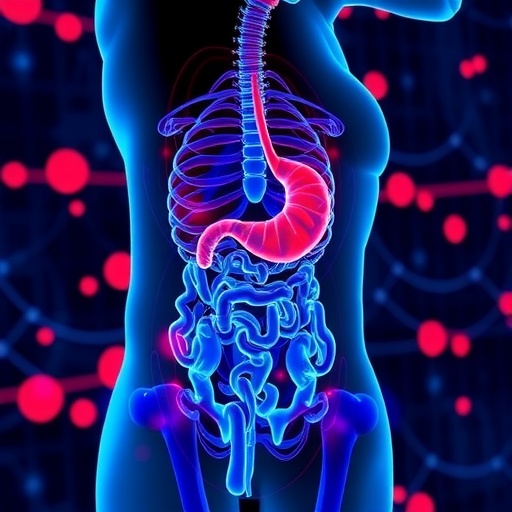
New imaging and light-activated treatment technologies aim to improve noninvasive detection, real-time monitoring, and targeted therapy in IBD, which could eventually enable more precise, personalized care and reduce reliance on invasive procedures.
Researchers; clinicians in gastroenterology and imaging; patients interested in emerging diagnostics and therapies; translational nanomedicine investigators.
This review describes recent advances in near-infrared (NIR) fluorescence imaging and NIR-responsive nanomaterials being developed for diagnosis, monitoring, and therapy in inflammatory bowel disease (IBD). It summarizes fundamentals of NIR-I/NIR-II optical windows, probe and nanoparticle design, activatable dyes, and nanoparticle imaging agents.
The article also reviews NIR-triggered therapeutic approaches under preclinical study, including photothermal and photodynamic therapies, triggered drug delivery systems, nanozyme catalytic therapy, and combination strategies involving antioxidants, immunomodulation, and microbiota-directed approaches.
It discusses multimodal and image-guided strategies and highlights translational challenges and future directions for clinical application.
Summary is grounded in the article abstract (review) and reflects preclinical and early translational work; it does not report clinical trial results.
Review the original publication for the complete reporting, methods, and context.
This Cure8 brief is based on source text from the linked article. Cure8 is informational only and is not a substitute for professional medical advice, diagnosis, or treatment.
Researchers are exploring circRNAs as new molecular players in IBD inflammation; that could lead to future biomarker tests or novel treatments targeting immune pathways relevant to Crohn’s disease and ulcerative colitis.
AI tools could make objective disease assessment faster and more consistent, help detect inflammation beyond what symptoms suggest, and ultimately support more personalized treatment choices for people with Crohn’s...
This review examines a noninvasive neuromodulation strategy (ta‑VNS) that might modulate immune and gut‑barrier biomarkers in IBD and could become an adjunctive therapy if validated in trials. Patients and clinicians may...