
bioengineer.org
Cure8 news brief
Cure8 news brief
AI tools could make objective disease assessment faster and more consistent, help detect inflammation beyond what symptoms suggest, and ultimately support more personalized treatment choices for people with Crohn’s disease or ulcerative colitis.
Improved image and histology analysis may shorten review time and reduce variability between clinicians.
Patients with Crohn’s disease or ulcerative colitis, clinicians who perform endoscopy or interpret imaging/pathology, researchers developing AI and multimodal biomarkers, and teams working on microbiome or biomarker-driven precision IBD care.
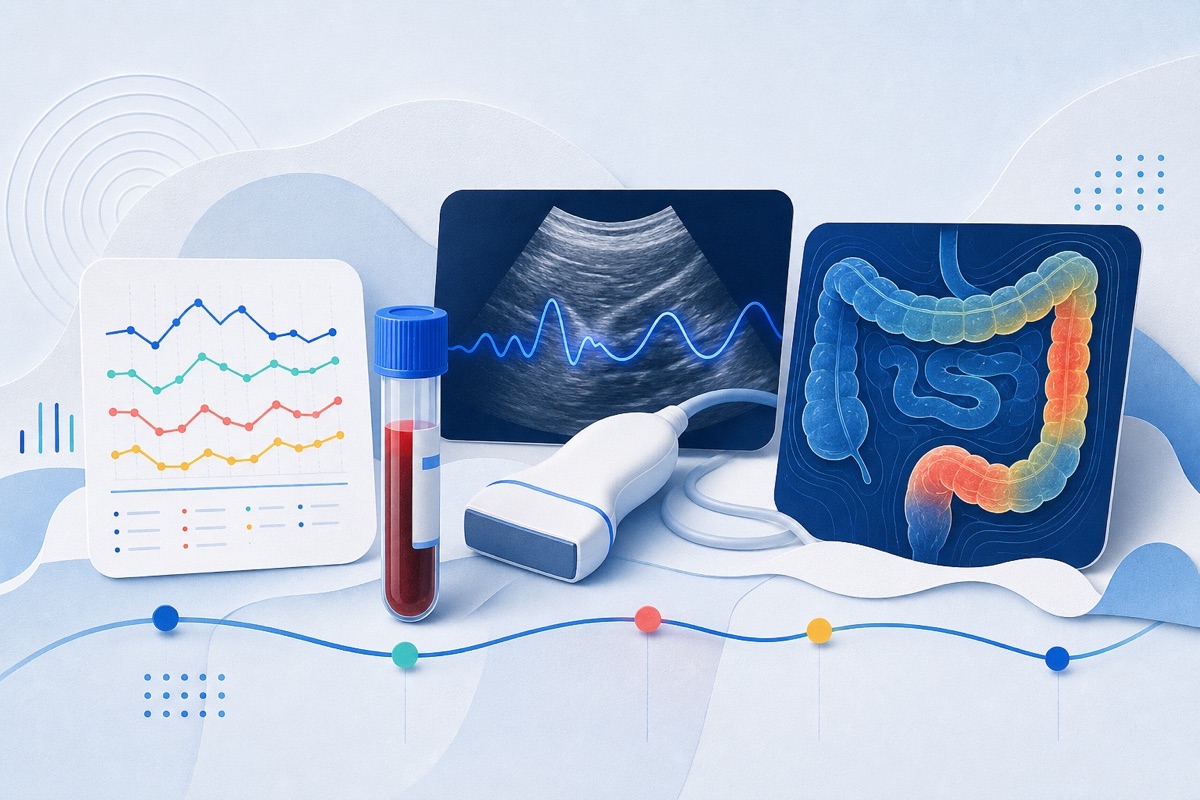
A recent Chinese Medical Journal review (June 9, 2026) summarizes how AI and machine-learning are being developed across IBD care — from endoscopic image analysis and capsule endoscopy to digital histology, imaging, biomarker integration, and multimodal platforms that combine clinical, molecular, and microbiome data.
The review highlights practical near-term uses (computer vision for endoscopic scoring and capsule-video triage, digital pathology for histologic quantification, and AI-assisted interpretation of MRI/ultrasound) and longer-term goals of multimodal prediction tools to support personalized treatment decisions.
It frames AI as a decision-support technology rather than a replacement for clinicians.
This is a review article summarizing research directions and published studies; it does not report new trial results. Many AI systems described require external validation, prospective testing in routine clinical workflows, and careful assessment for bias, generalizability, and regulatory approval before clinical use.
Review the original publication for the complete reporting, methods, and context.
This Cure8 brief is based on source text from the linked article. Cure8 is informational only and is not a substitute for professional medical advice, diagnosis, or treatment.
People with IBD who have no or few symptoms but still have moderate–severe inflammation on endoscopy face uncertainty about whether to switch therapies to aim for endoscopic remission.
The article explains how gut bacteria may contribute to IBD and summarizes common tests and treatments people are likely to encounter. It highlights emerging microbial therapies (probiotics and FMT) that some patients...
Handheld IUS could make noninvasive bowel assessment faster and more accessible for people with IBD, helping with triage and short-term monitoring without immediately resorting to endoscopy or advanced imaging.