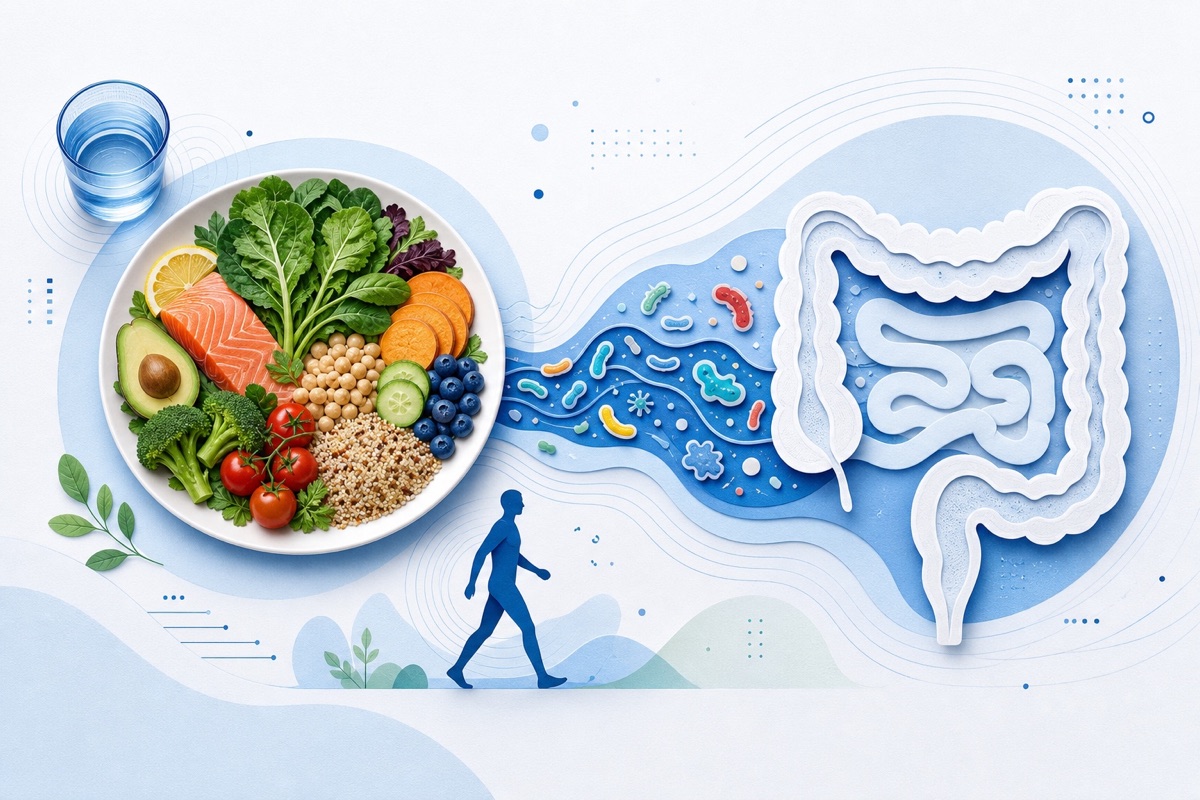
Diet is a modifiable factor many people with IBD try to use to manage symptoms and disease; this review summarizes what is and isn’t supported by current evidence for popular diets and structured nutritional therapies.
Who Should Pay Attention
Adult patients with IBD (especially Crohn’s), caregivers, dietitians, gastroenterologists, and researchers interested in diet–microbiome interactions.
Study Snapshot
Story typeResearch paper
Evidence typeResearch paper
Source depthJournal abstract
What To Know
The review finds that Mediterranean and other minimally processed, plant-forward diets are linked to better overall diet quality and potentially favourable microbiome and metabolic profiles, but current trials do not consistently show they induce objective remission or mucosal healing.
Western and ultra-processed food–heavy patterns are associated with higher risk of developing IBD, though evidence that they trigger relapse in people already diagnosed is less consistent. Symptom-focused approaches such as low-FODMAP diets can help selected gastrointestinal symptoms but should not be seen as anti-inflammatory treatments.
Protocolled nutritional therapies (exclusive enteral nutrition and the Crohn’s Disease Exclusion Diet) have defined roles, particularly for Crohn’s disease. Implementation and safety depend on affordability, food security, disease phenotype, nutritional risk, and access to specialist dietetic care.
Keep In Mind
Narrative-review level evidence synthesizes trials and observational studies but is not a single large randomized trial; the review notes gaps and limitations in evidence and emphasizes feasibility, equity, and specialist support for safe implementation.
Source Details
Review the original publication for the complete reporting, methods, and context.
This Cure8 brief is based on source text from the linked article. Cure8 is informational only and is not a substitute for professional medical advice, diagnosis, or treatment.
A potential link between ultra-processed food intake and Crohn’s relapse could influence dietary conversations for people in remission, but the current evidence is weak and not definitive.
Many people with Crohn’s disease have ongoing inflammation despite stable medication. If dietary personalization can reduce inflammation, it could offer a nonpharmacologic add-on to help bridge gaps without immediate...
Diet quality was linked to gut microbiome features and exploratory differences in inflammatory markers and symptoms in adults with Crohn disease from Puerto Rico; understanding these links may help tailor dietary...