Candidalysin is a toxin from Candida albicans that can damage epithelial barriers and trigger inflammation. If candidalysin contributes to intestinal inflammation or barrier dysfunction, it could help explain fungal roles in IBD and point to new research or therapeutic targets.
Who Should Pay Attention
Researchers (Candida pathogenesis, microbiome, immunology), clinicians interested in microbial contributions to IBD, and patients tracking research on fungi and inflammatory diseases.
Study Snapshot
Story typeResearch paper
Evidence typeResearch paper
Source depthJournal abstract
What To Know
This is a peer-reviewed review article (abstract provided) that focuses on the biology and pathogenic mechanisms of candidalysin: how it contributes to epithelial barrier penetration, fungal virulence, and host–pathogen interactions.
The authors highlight evidence connecting candidalysin activity to mucosal invasion and to inflammatory pathways that may be relevant in IBD and other inflammation-associated conditions. They also outline unresolved questions and suggest candidalysin as a potential target for future vaccines or therapeutics.
The review does not provide new clinical trial results; it synthesizes existing experimental and clinical literature and points to gaps for future research. It is useful for understanding a possible fungal-derived contributor to inflammation and barrier dysfunction in diseases that overlap with IBD.
Keep In Mind
This is a review (abstract-level content provided). It synthesizes existing studies and highlights unresolved questions; it does not present new trial results or definitive clinical findings linking candidalysin to non-candidiasis diseases.
Source Details
Review the original publication for the complete reporting, methods, and context.
Research paperEvidence type derived from source or registry metadata.
PublicationBiochimie
AuthorsHanyu Zhu, Xue Wang, Jing Shao
InstitutionLaboratory of Infection and Immunity, College of Integrated Chinese and Western Medicine (College of Life Science), Anhui University of Chinese Medicine, 433 Room, Zhijing Building, 350 Longzihu Road, Xinzhan District, Hefei, Anhui, 230012, PR China.
Conflict statement: Declaration of competing interest The authors declare that they have no known competing financial interests or personal relationships that could have appeared to influence the work reported in this paper.
This Cure8 brief is based on source text from the linked article. Cure8 is informational only and is not a substitute for professional medical advice, diagnosis, or treatment.
If AJs and E-cadherin signaling influence intestinal inflammation, that could change how researchers think about IBD causes and point to new molecular targets for study.
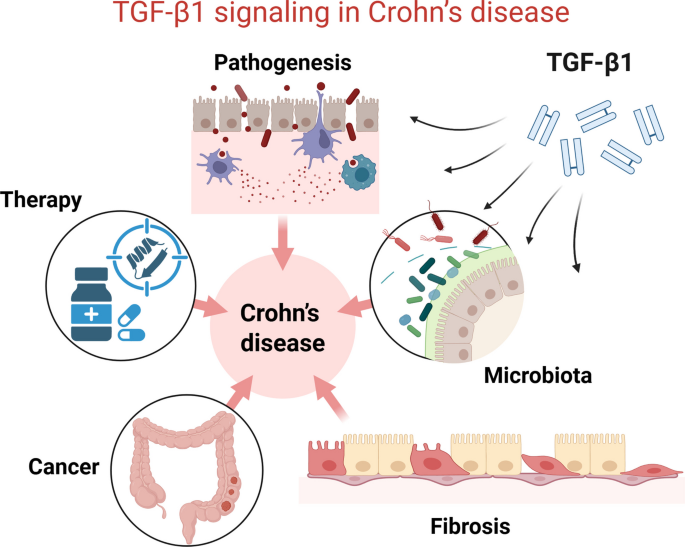
TGF-β1 is a central regulator implicated in inflammation control, development of fibrosis, and possible cancer progression in Crohn’s disease; advances in this area could inform future treatments or biomarker...
PSC frequently occurs with IBD and has unclear origins; understanding a shared glandular mechanism could help explain the link and point to new research targets relevant to both liver and colon disease.