Fibrostenosing Crohn’s disease causes strictures that often need endoscopic or surgical treatment; CAR-based cell therapy is a research idea that aims to directly target cells driving fibrosis rather than only controlling inflammation.
If successful, such approaches could offer new non-surgical options for patients with fibrotic strictures in the future.
Who Should Pay Attention
Patients with fibrostenosing Crohn’s disease, clinicians treating stricturing IBD, researchers developing cell therapies or antifibrotic strategies, and translational immunologists.
Study Snapshot
Story typeResearch paper
Evidence typeResearch paper
Source depthJournal abstract
What To Know
This article (abstract) reviews the concept of applying chimeric antigen receptor (CAR)–based cell therapies to fibrostenosing Crohn’s disease (FSCD).
It describes the rationale for targeting cellular drivers of fibrogenesis (activated fibroblasts, profibrotic niche cells) rather than inflammation alone, evaluates candidate cellular targets and CAR platforms, and discusses translational and safety challenges for bringing such approaches to intestinal strictures.
The piece is an expert-scoped review/assessment grounded in intestinal pathobiology and experience from other fibrotic diseases, not a clinical trial report. It focuses on research and development considerations: lesion accessibility, disease stage, target selection, therapeutic modality choice, and safety/translation hurdles.
This is an abstract-level summary from Frontiers in Immunology; the full article will have more detail on specific targets, preclinical evidence, and proposed strategies.
Keep In Mind
This is an abstract/overview discussing a research direction (CAR-cell therapy) and translational challenges; it does not report clinical trial results. CAR therapies for fibrotic disease are experimental and would require preclinical validation and early-phase trials before clinical use.
The article integrates evidence from other fibrotic settings rather than presenting completed human studies in FSCD.
Source Details
Review the original publication for the complete reporting, methods, and context.
This Cure8 brief is based on source text from the linked article. Cure8 is informational only and is not a substitute for professional medical advice, diagnosis, or treatment.
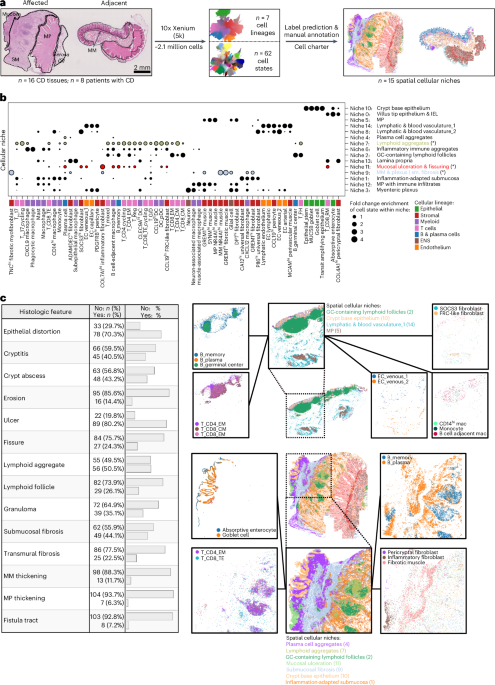
The study maps layer-specific gene programs in fibrostenotic Crohn's disease and pinpoints the submucosa as a hotspot for fibromuscular remodeling that underlies strictures and bowel obstruction risk.
The paper maps distinct stromal cell states tied to inflamed versus fibrotic tissue niches in Crohn’s disease and shows that these states have different chromatin configurations and drug-modifiable properties — pointing...
The study maps cell types and signals linked to submucosal scarring in Crohn's disease, a complication without drug treatments that often requires surgery. Understanding these mechanisms could point to future therapeutic...