The review frames Crohn’s disease and ulcerative colitis as disorders driven by durable metabolic and epigenetic reprogramming in mucosal immune cells, which could explain relapse-prone disease and point to new therapeutic or biomarker approaches.
Who Should Pay Attention
Clinicians and researchers working on IBD immunology, metabolism, or epigenetics; patients interested in research trends and future therapeutic targets.
Study Snapshot
Story typeResearch paper
Evidence typeSystematic Review or Meta Analysis
Source depthFull source text
What To Know
The paper integrates studies through September 2026 across cellular models, animal experiments, and patient cohorts to map how glucose, lipid, and amino-acid metabolism interact with chromatin modifications (acetylation, methylation, lactylation, palmitoylation, phosphorylation) to shape cytokine programs and tissue repair.
It highlights specific cellular mechanisms — for example, HIF-1α/mTOR-driven glycolysis in inflamed macrophages, IL-10’s role in restraining inflammatory metabolism, and PPAR family members’ influence on lipid handling and regulatory programs.
The review also notes that several cytokine-targeting therapies failed in clinical trials, underscoring the complexity of translating pathway insights into successful drugs. Practical takeaways: this is a mechanistic, research-focused synthesis rather than a treatment guideline.
It points to metabolic and epigenetic circuits as promising research directions that could eventually inform new biomarkers or therapies, but does not present clinical recommendations or new approved treatments.
Keep In Mind
This article is a literature review (synthesis of experimental, animal, and patient studies) through Sept 2026, not a clinical trial or guideline. Mechanistic insights do not equate to proven therapies; some cytokine-targeting drugs discussed have failed in trials.
Source Details
Review the original publication for the complete reporting, methods, and context.
This Cure8 brief is based on source text from the linked article. Cure8 is informational only and is not a substitute for professional medical advice, diagnosis, or treatment.
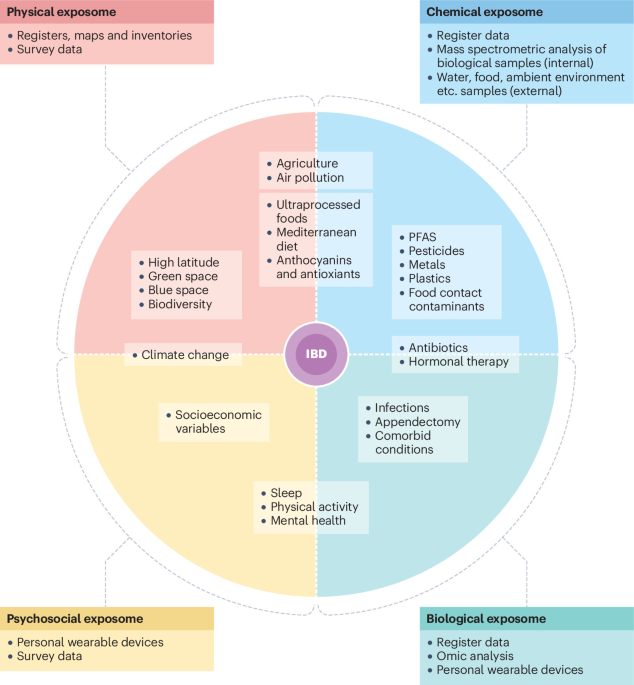
The exposome perspective emphasizes that many non-genetic, potentially modifiable environmental factors likely influence IBD risk. Understanding these factors could help guide prevention research and public-health...
The findings suggest that tissue-based immune profiling may better identify biologically distinct subgroups in ulcerative colitis than blood tests, which could affect research on personalized treatment or trial...
A validated AI biomarker that predicts which IBD treatments are likely to work could reduce trial-and-error in treatment choices, potentially shortening time to effective therapy for people with Crohn's disease or...