Chemical communications (Cambridge, England)
Cure8 research brief
Cure8 research brief
A probe that images superoxide in inflamed colons could help researchers study oxidative stress in ulcerative colitis and potentially guide development of new biomarkers or imaging approaches.
Researchers, translational scientists, and clinicians interested in IBD imaging and oxidative-stress biomarkers.
The paper describes engineering a sequentially-activatable probe with rapid response, high selectivity, and low background signal. The authors used the probe for fluorescence imaging in PC-12 cells and in mouse colons with experimentally induced ulcerative colitis.
Because the source content available is an abstract, details about methods, validation, safety, or applicability to human patients are limited.
Abstract-level report of a basic-science study using cells and mouse models; not evidence of clinical utility. Details on probe performance, reproducibility, and safety are not available in the supplied text.
Review the original publication for the complete reporting, methods, and context.
This Cure8 brief is based on source text from the linked article. Cure8 is informational only and is not a substitute for professional medical advice, diagnosis, or treatment.
FAP appears linked to both inflammation and fibrosis in IBD; distinguishing cellular versus extracellular FAP might help develop or validate fibrosis biomarkers that detect fibrostenotic disease.
The study explores whether larger spleen size might play a causal role in the risk of ulcerative colitis or Crohn’s disease, using genetic data to reduce confounding. If a causal link exists, spleen volume could be a...
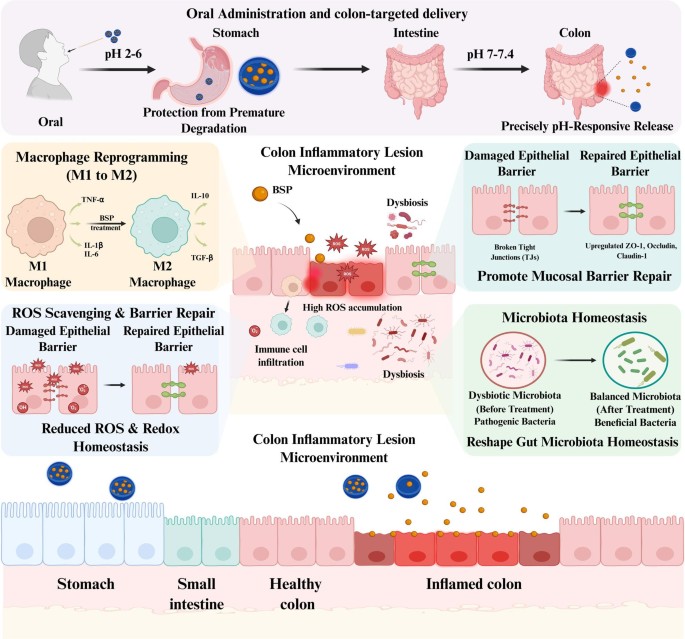
The study describes a new oral, colon‑targeted delivery system that improved outcomes in a mouse model of ulcerative colitis and shifted immune and microbiome markers—research that could inform future therapies focused...