
bioengineer.org
Cure8 news brief
Cure8 news brief
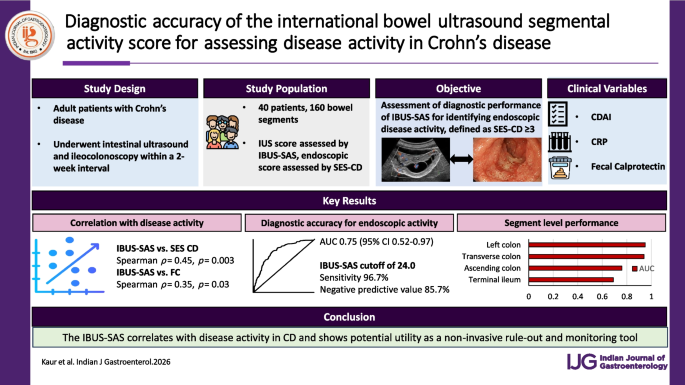
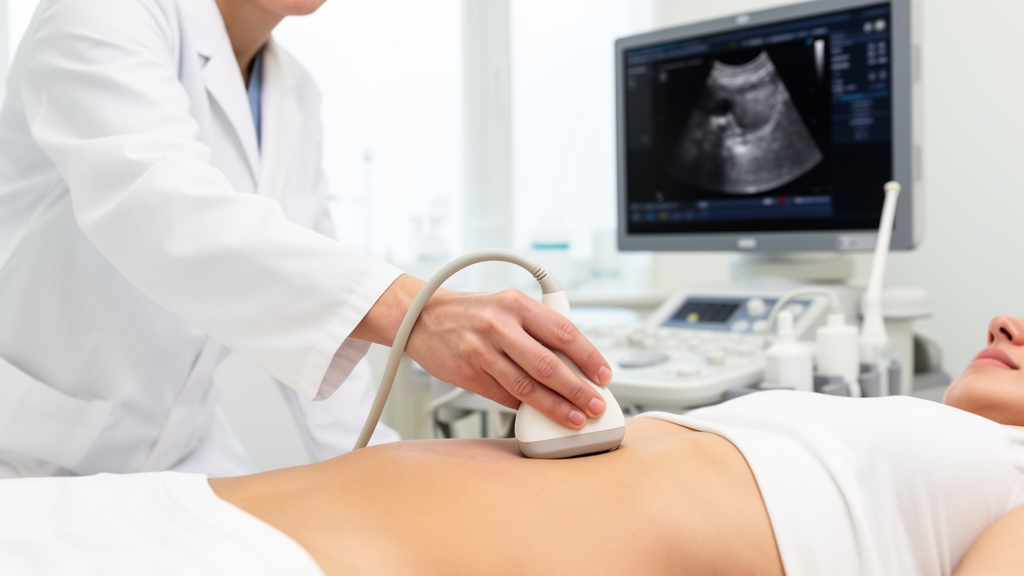
A noninvasive, bedside intestinal ultrasound score that tracks disease activity could offer radiation-free monitoring that aligns with symptoms and biomarkers, making follow-up easier and potentially faster for many people with Crohn’s disease.
It may also detect complications that influence management, though it misses perianal disease.
Adults with Crohn’s disease and their caregivers; gastroenterologists, radiologists, and IBD nurses involved in monitoring; researchers studying noninvasive disease activity measures.
This news item summarizes a prospective single-center study that tested a standardized intestinal ultrasound index (IBUS‑SAS) in 28 patients with established Crohn’s disease.
The ultrasound score correlated strongly with clinical disease activity (CDAI) and biomarkers (fecal calprotectin, CRP) and showed high discrimination for active and moderate-to-severe disease using exploratory cut-offs.
Ultrasound also identified inflammatory complications (strictures, fistulae, abscesses) and agreed well with CT/MRI for most findings, but it missed perianal disease in the two affected patients.
What the study reports: a bedside, radiation-free ultrasound protocol using bowel-wall thickness, Doppler, fat wrapping, and wall stratification was combined into the IBUS‑SAS index and compared with clinical scores, lab biomarkers, and cross-sectional imaging.
Correlations and ROC metrics in this small cohort were strong, and the authors present potential score cut-offs (24.5 for any activity, 38 for moderate-to-severe activity) but call them hypothesis-generating.
Practical takeaways: intestinal ultrasound appears promising as a monitoring tool that correlates with symptoms and biomarkers and can detect many transmural complications. However, the study is small, single-center, and operator-dependent; pelvic and perianal disease were not well-seen by ultrasound and may still require MRI.
Questions left open: external validation of the IBUS‑SAS cut-offs, reproducibility across operators and centers, and how ultrasound-based decisions would change patient management or outcomes.
The study enrolled 28 patients at a single center and lacked a prespecified sample-size calculation; the reported diagnostic cut-offs are exploratory and need external validation. Ultrasound performance depends on operator skill and is less reliable for deep pelvic or perianal disease, which often requires MRI.
Review the original publication for the complete reporting, methods, and context.
This Cure8 brief is based on source text from the linked article. Cure8 is informational only and is not a substitute for professional medical advice, diagnosis, or treatment.
IUS with the IBUS‑SAS score may offer a reliable, noninvasive way to monitor Crohn’s disease activity that correlates with clinical scores and biomarkers and aligns well with CT/MRI for most findings.
Standardized intestinal ultrasound scoring could help non-invasively monitor Crohn’s disease activity and reduce reliance on colonoscopy for some assessments. A high-sensitivity IUS score may be useful to rule out...
A multimodal, simpler activity score could improve practical disease monitoring when full ileocolonoscopy isn’t possible and help standardize treat-to-target practice across centers.