European Archives of Psychiatry and Clinical Neuroscience· via Crossref
Cure8 research brief
Results of the validated German Perceived Stress Questionnaire (PSQ) from a large German cohort of healthy adults and different disease groups compared to historical reference values
Perceived stress affects quality of life and may influence symptom burden, disease management, and mental health in people with IBD. Updated PSQ benchmarks from a contemporary cohort help researchers and clinicians interpret stress scores in studies or practice.
Who Should Pay Attention
Adult patients with IBD, clinicians and mental-health providers caring for people with IBD, researchers studying stress, quality of life, or psychosocial factors in chronic disease cohorts.
Study Snapshot
Story typeResearch paper
Evidence typeResearch paper
Source depthJournal abstract
What To Know
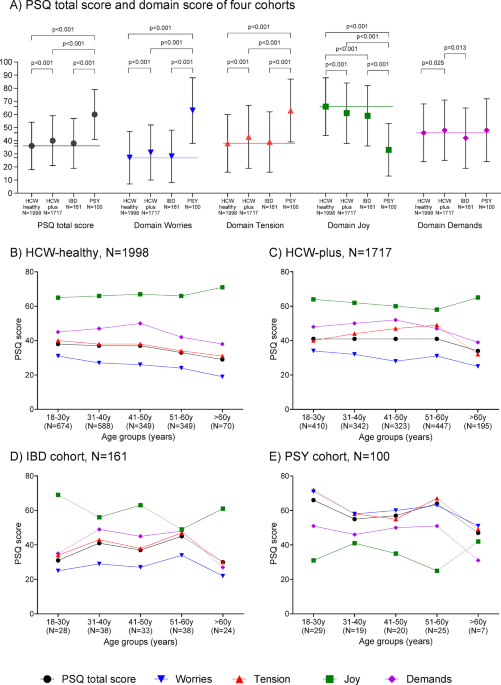
This study used the validated German Perceived Stress Questionnaire (PSQ) in a large 2021 German cohort (N=4115) enrolled in the RisCoin study, including hospital workers, people with IBD, and psychiatric patients who had at least two COVID-19 vaccinations.
The authors compared PSQ total and domain scores (worries, tension, joy, demands) with historical 2005 reference values and used multivariable logistic regression to identify factors linked to higher stress scores.
Key findings reported in the abstract: healthcare workers without chronic conditions had higher mean PSQ total scores than historical healthy adults but lower scores than healthcare workers with chronic conditions; female healthcare workers, younger age, frequent ready-to-eat food consumption, and living with children were associated with higher stress, while regular physical activity and healthier diet were associated with lower stress.
IBD participants in this cohort had lower PSQ scores than historical IBD patients; psychiatric patients had the highest scores. These results are presented as updated benchmark PSQ values from this cohort and as associations between lifestyle/demographic factors and perceived stress.
Keep In Mind
Structured content depth is abstract: the classification and brief summary are grounded in the article abstract provided, not a full review of the complete paper. The cohort was enrolled in late 2021 and consists of hospital employees and patients who had ≥2 COVID-19 vaccinations; generalizability depends on representativeness of that sample.
Reported associations are observational and do not establish causation.
Source Details
Review the original publication for the complete reporting, methods, and context.
Funding disclosed by the source: Klinikum der Universität München
This Cure8 brief is based on source text from the linked article. Cure8 is informational only and is not a substitute for professional medical advice, diagnosis, or treatment.
IBD patients often face high psychological burden; knowing whether MBCT is acceptable and feasible helps patients and clinicians weigh it as a support option. Practical barriers (time, fatigue, disease activity) and...
People with IBD face higher rates of anxiety, depression and other psychiatric disorders that often begin years before diagnosis and can persist long term. Recognizing and treating mental-health issues early can improve...
Mood disorders commonly co-occur with chronic somatic diseases, including IBD; understanding shared mechanisms may explain worse outcomes and suggest multidisciplinary care needs.