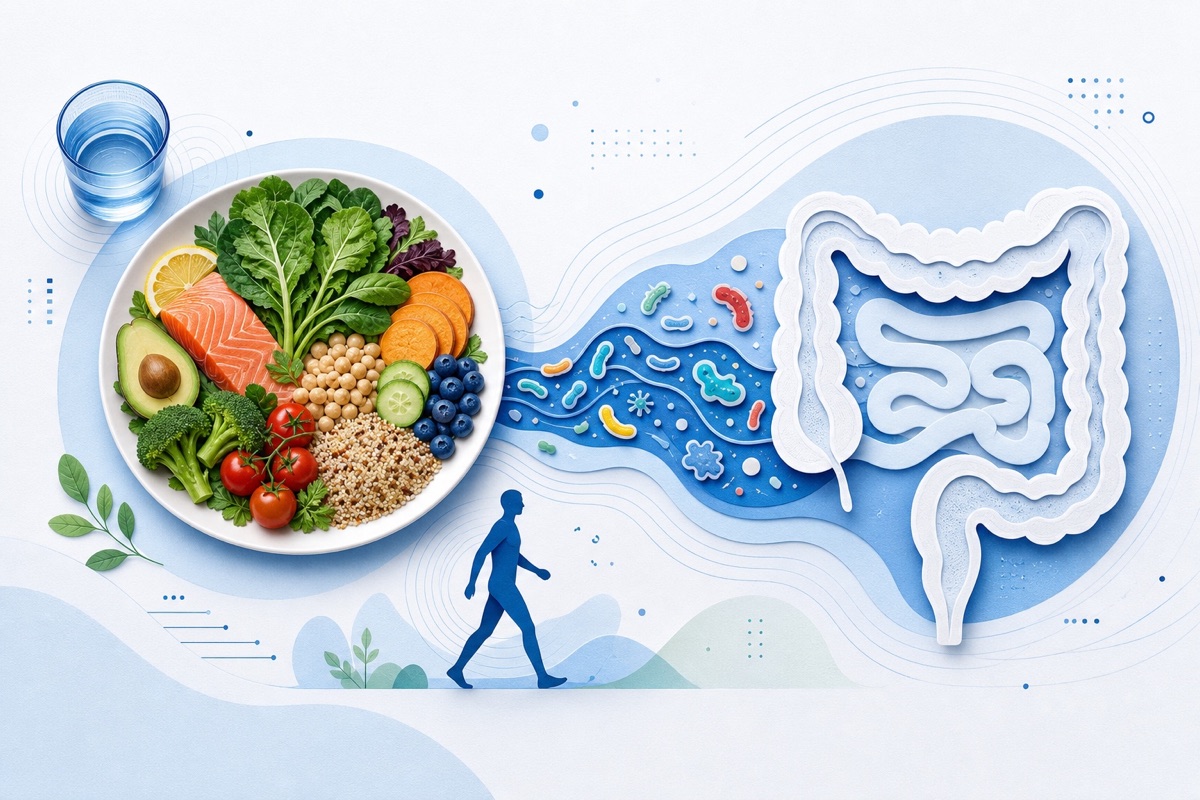
Patients with IBD commonly change or restrict their diets and often want reliable guidance. This study tested automated personalized feedback plus an online nutrition portal and found improved food-related quality of life but no clear improvement in objective diet quality over six months.
Who Should Pay Attention
Adults with IBD, dietitians and gastroenterology clinicians, and researchers interested in digital dietary interventions for IBD.
Study Snapshot
Story typeResearch paper
Evidence typeResearch paper
Source depthJournal abstract
What To Know
This was a single-arm pre–post study (no randomized control group) of 108 adults with IBD who completed a validated food-frequency questionnaire and a 29-item Fr-QoL survey at baseline and six months. Participants received automated personalized feedback and access to an online nutrition portal; the tools were rated positively.
The main finding reported is an improvement in food-related quality of life at six months, while objective measures of diet quality and adherence to nutrient reference values did not improve and in some cases declined.
The authors conclude the digital tools are feasible and acceptable but likely need to be combined with structured dietitian-led support or other strategies to produce measurable improvements in dietary intake and nutrient adequacy.
Keep In Mind
Single-arm pre–post design without a control group limits causal conclusions. The study reports feasibility and acceptability but indicates that combining digital tools with structured dietitian support may be necessary to improve nutrient intake and diet quality.
Source Details
Review the original publication for the complete reporting, methods, and context.
This Cure8 brief is based on source text from the linked article. Cure8 is informational only and is not a substitute for professional medical advice, diagnosis, or treatment.
If you or your clinician are considering dietary therapy like the CDED for Crohn's disease, microbiome features at baseline may influence who achieves sustained remission. Understanding these links could help personalize...
This study suggests that higher intake of specific fibers (beta‑glucan and inulin) may be linked to lower Crohn’s risk in people with a family history, and it connects those fibers to biomarkers of inflammation, barrier...
The study investigates how components of exclusive enteral nutrition (EEN), particularly transforming growth factor‑β (TGF‑β), may help restore intestinal barrier function after colitis. That could help explain why EEN...