Dietary Beliefs, Genetic Risk Perceptions, and Preventive Dietary Practices Among Unaffected First-Degree Relatives of Individuals with Inflammatory Bowel Disease: A Mixed Methods Study in Greece
First‑degree relatives of people with IBD may worry about their own risk and consider diet as a way to reduce that risk. The study suggests how beliefs about genetics and diet influence whether relatives make preventive dietary changes—and points to a role for clearer communication and individualized advice.
Who Should Pay Attention
Unaffected first‑degree relatives of people with IBD, clinicians and dietitians who counsel at‑risk relatives, and researchers studying prevention, risk communication, or behavioral interventions in IBD.
Study Snapshot
Story typeResearch paper
Evidence typeResearch paper
Source depthJournal abstract
What To Know
This preprint reports an exploratory mixed-methods study of 103 unaffected first‑degree relatives (FDRs) of people with IBD in Greece plus 16 semi-structured interviews.
The survey measured FDRs’ perceptions of genetic risk, beliefs about diet and IBD, and self-reported preventive dietary practices; interviews explored motivations and barriers using the Health Belief Model.
The authors found that believing diet is important was the strongest predictor of making dietary changes, while stronger genetic-risk beliefs were linked with fewer preventive behaviors even after consulting professionals.
Interview themes suggested participants more often saw diet as relevant to managing IBD rather than preventing it; fear of developing IBD and guidance from healthcare professionals were main motivators for change.
These findings support the idea that clearer risk communication and individualized dietary counselling may help bridge the gap between knowledge and preventive actions among relatives of people with IBD.
Study type and limits: this is a preprint and an exploratory, observational mixed-methods study with a modest sample from one country; it does not establish causation.
Keep In Mind
this is a preprint based on a cross‑sectional survey and interviews in Greece; findings are exploratory and not evidence that specific dietary changes prevent IBD. The sample size is limited and reflects perceptions and self‑reported behaviors rather than measured clinical outcomes.
Source Details
Review the original publication for the complete reporting, methods, and context.
This Cure8 brief is based on source text from the linked article. Cure8 is informational only and is not a substitute for professional medical advice, diagnosis, or treatment.
Many people with Crohn’s disease have ongoing inflammation despite stable medication. If dietary personalization can reduce inflammation, it could offer a nonpharmacologic add-on to help bridge gaps without immediate...
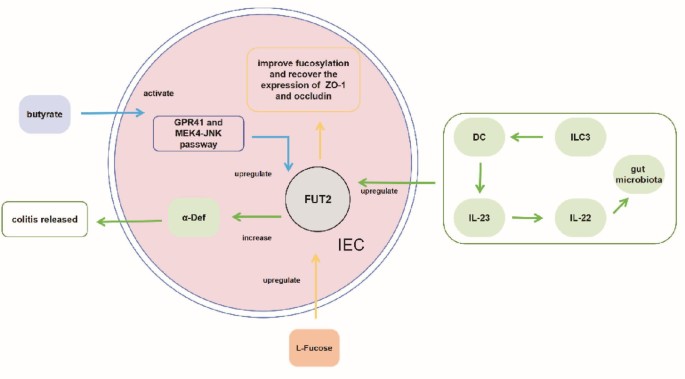
FUT2-mediated fucosylation shapes gut glycans and the microbiome, mechanisms relevant to inflammation and mucosal barrier function in IBD. Understanding these pathways could point to future biomarkers or therapeutic...
The study synthesizes many stool metagenomes to find consistent microbial species, functional pathways, and strain-level differences linked to IBD and to distinctions between Crohn’s disease and ulcerative...