Health-related quality of life after diagnosis of ulcerative colitis and Crohn’s disease: 3-year trajectories and factors associated with clinically meaningful improvement (the IBSEN III cohort)
This study follows people from diagnosis and shows that about half achieve clinically meaningful improvements in quality of life by 3 years, but many remain below general population norms.
It highlights that symptom control and psychosocial factors—depression, fatigue, IBS-like symptoms—are important determinants of patient-reported recovery.
Who Should Pay Attention
Newly diagnosed adult IBD patients; clinicians treating early UC or Crohn’s disease; researchers focused on HRQoL, patient-reported outcomes, and psychosocial factors.
Study Snapshot
Story typeResearch paper
Evidence typeResearch paper
Source depthJournal abstract
What To Know
The study followed adults with new-onset UC or CD using the IBDQ and SF-36 at diagnosis, 1 year, and 3 years. Around half of patients reached established minimal clinically important difference thresholds by follow-up, but average HRQoL scores stayed below Norwegian population norms.
Achieving symptomatic remission was consistently associated with higher odds of meaningful HRQoL improvement. By contrast, depressive symptoms, substantial fatigue, and IBS-like symptoms were associated with lower odds of improvement.
The authors report that endoscopic remission, use of biologic therapy, and bowel surgery in the first year were not significantly linked to clinically meaningful HRQoL gains in their analyses.
Keep In Mind
Summary is based on the journal abstract (structured content depth: abstract). The study reports associations from a population-based cohort; it does not by itself prove causation. Full methods and subgroup details are in the article.
Source Details
Review the original publication for the complete reporting, methods, and context.
Funding disclosed by the source: Telemark Hospital Trust, award 3092.03; Takeda Pharmaceuticals, Pfizer; Ferring Pharmaceuticals; Tillotts Pharma; the Dam Foundation; the South-Eastern Health Authorities
This Cure8 brief is based on source text from the linked article. Cure8 is informational only and is not a substitute for professional medical advice, diagnosis, or treatment.
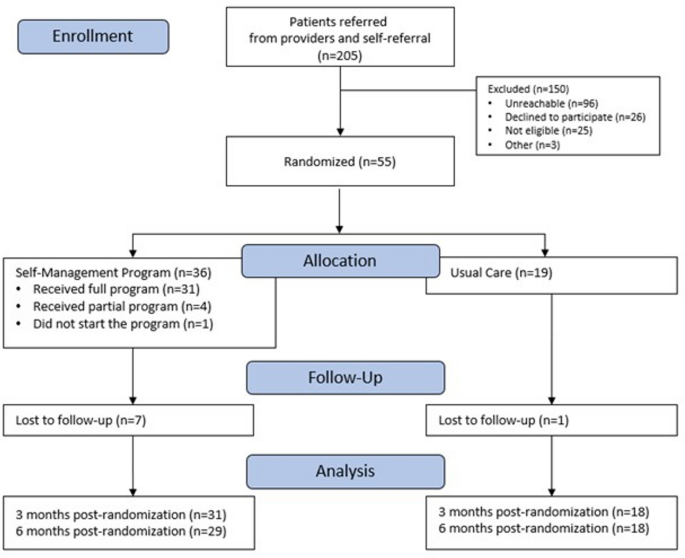
Self‑management programs delivered by nurses may help people with IBD improve daily functioning, confidence in managing their condition, and quality of life even when inflammation markers don’t change. That matters...
Fatigue greatly affects quality of life for people with IBD even in remission; if effective and scalable, a mobile CBT program could offer accessible symptom support. The trial will also examine engagement factors...
Quality of life is often substantially affected in IBD; this study identifies active disease, greater severity, prior surgery, and stricturing Crohn's disease as factors linked to lower HRQoL, highlighting areas...