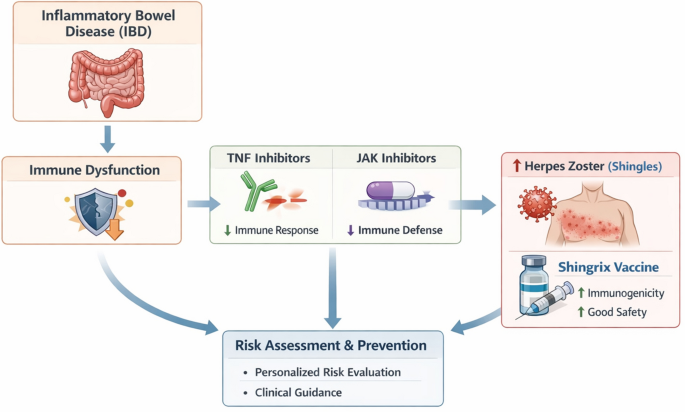
Herpes zoster is more common and can be more severe in people with IBD, especially those on certain immunosuppressive drugs. Understanding therapy-specific risks and vaccine options can help prevent painful complications.
Who Should Pay Attention
Adults with IBD, especially patients using biologics or JAK inhibitors, gastroenterology clinicians, and care teams advising on vaccination.
Study Snapshot
Story typeResearch paper
Evidence typeResearch paper
Source depthJournal abstract
What To Know
This narrative review summarizes evidence about why people with IBD are more susceptible to herpes zoster, how different drugs change that risk, and what prevention options exist.
The authors highlight that anti-TNF drugs and JAK inhibitors are associated with increased HZ risk, with JAK inhibitors showing a dose-dependent effect likely related to interferon signaling.
The recombinant zoster vaccine (RZV) is presented as immunogenic and safe in immunocompromised patients, but uptake is low; the review aims to give a practical framework for prevention and management. Practical takeaways Vaccination with RZV is a central prevention strategy discussed.
Clinicians and patients should weigh HZ risk when choosing or dosing immunosuppressive therapies and consider vaccination timing. The review compiles current therapy-specific risk information to inform conversations between patients and providers.
Keep In Mind
This item is a narrative review (abstract available) published in a peer-reviewed journal. It synthesizes existing evidence and provides practical recommendations, but it is not a new clinical trial or guideline. Vaccination recommendations should be discussed with treating clinicians.
Source Details
Review the original publication for the complete reporting, methods, and context.
This Cure8 brief is based on source text from the linked article. Cure8 is informational only and is not a substitute for professional medical advice, diagnosis, or treatment.
Lung involvement is an underrecognized extraintestinal complication in IBD and can reflect disease activity, altered gut–lung immune signaling, or medication toxicity — distinguishing the cause is important for...
Chronic inflammation in Crohn’s, especially when the colon is affected, raises colorectal cancer risk over time. Knowing risk factors and recommended screening helps people with Crohn’s get earlier detection and...
People with Crohn’s often have other inflammatory or immune-related conditions. Knowing these links can help patients and clinicians watch for symptoms that might need evaluation or treatment.