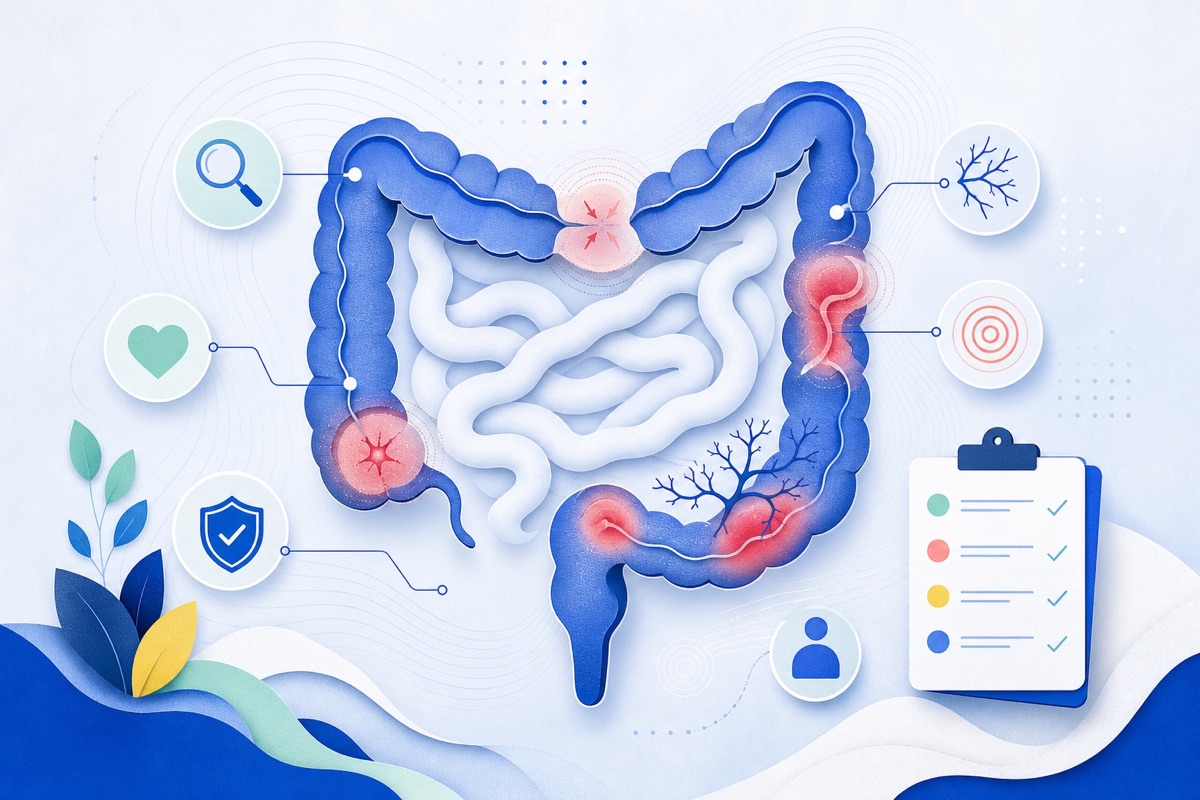
This helps people with IBD and their care teams make delivery plans: if perianal disease is not active, having IBD alone was not linked to higher perineal injury risk in first-time vaginal births in this study.
Who Should Pay Attention
Pregnant people with IBD (without active perianal disease), obstetricians, gastroenterologists, maternity care teams, and pregnant people planning delivery mode.
Study Snapshot
Story typeResearch paper
Evidence typeResearch paper
Source depthMetadata only
What To Know
This retrospective cohort study (2012–2023) of term, singleton, cephalic primiparous vaginal births found similar overall rates of perineal injury, obstetric anal sphincter injury (OASI), and episiotomy between women with IBD (excluding active perianal disease) and women without IBD.
After adjusting for other factors, IBD was not associated with increased perineal trauma. Known obstetric predictors—vacuum delivery, higher birthweight, occiput posterior position, prolonged second stage, and epidural—remained important. The paper also reports no difference in outcomes when comparing ulcerative colitis and Crohn’s disease subgroups.
The authors conclude that vaginal birth is an appropriate delivery mode for people with IBD who do not have active perianal disease.
Keep In Mind
This is a single-center retrospective cohort; active perianal disease cases were excluded per institutional guidelines, so findings do not apply to people with active perianal disease. As an observational study, it can identify associations but not prove causation.
Source Details
Review the original publication for the complete reporting, methods, and context.
This Cure8 brief is based on source text from the linked article. Cure8 is informational only and is not a substitute for professional medical advice, diagnosis, or treatment.
Pregnancy planning and contraception are important for people with IBD because active disease at conception is linked to worse pregnancy outcomes. The article shows many women with IBD are unsure about how contraception...
Patients with Crohn's disease had a higher adjusted risk of periprosthetic joint infection within 90 days after elective joint replacement, while ulcerative colitis did not. This difference could affect preoperative risk...