Food and chemical toxicology : an international journal published for the British Industrial Biological Research Association· via PubMed
Cure8 research brief
Intestinal toxicity mechanisms of 6PPD and 6PPD-Q and their potential relevance to inflammatory bowel disease: network toxicology and experimental evidence.
The paper links common tire-derived pollutants to intestinal injury and pathways also implicated in Crohn’s disease and ulcerative colitis, suggesting environmental chemicals could influence gut inflammation. If confirmed, this line of research may help explain environmental contributors to IBD risk or flares.
Who Should Pay Attention
Researchers studying environmental risk factors for IBD, clinicians interested in environmental health and IBD etiology, and patients or caregivers curious about chemical exposures and gut inflammation.
Study Snapshot
Story typeResearch paper
Evidence typeResearch paper
Source depthJournal abstract
What To Know
This study used network toxicology, molecular docking, transcriptome comparisons, and mouse- and cell-based experiments to examine intestinal effects of two tire-derived pollutants, 6PPD and its ozonation product 6PPD-quinone (6PPD-Q).
The authors report that both compounds produced colon injury, reduced tight-junction protein expression, and increased inflammatory markers in mice after repeated exposure, and caused dose-dependent cytotoxicity, reactive oxygen species production, and proinflammatory gene expression in macrophage cells.
The paper also mapped many predicted molecular targets shared between the compounds and genes linked to Crohn's disease and ulcerative colitis; pathway analyses highlighted inflammatory signaling, oxidative stress, kinase signaling, and mucosal-repair pathways.
Molecular docking suggested potential binding between the chemicals and several protein targets, and some of those targets were reported as dysregulated in clinical IBD transcriptomic datasets.
The authors conclude that 6PPD and 6PPD-Q can induce intestinal injury and inflammatory activation in experimental models and that further work in established IBD models is needed to test whether these pollutants worsen pre-existing intestinal inflammation.
Keep In Mind
This report combines computational network analyses with experimental mouse and cell studies; it is an experimental/toxicology study rather than clinical research. The authors note the need for further studies using established IBD models to determine whether these chemicals worsen pre-existing disease.
The findings do not establish that these pollutants cause or exacerbate IBD in people.
Source Details
Review the original publication for the complete reporting, methods, and context.
Conflict statement: Declaration of Competing Interest ☒ The authors declare that they have no known competing financial interests or personal relationships that could have appeared to influence the work reported in this paper.
This Cure8 brief is based on source text from the linked article. Cure8 is informational only and is not a substitute for professional medical advice, diagnosis, or treatment.
Fibrosis and stricturing are key problems in Crohn’s disease with limited therapies; this study identifies a microbiota–bile acid–GPBAR1 pathway by which a specific probiotic mix reduced inflammation and fibrosis in...
Researchers report links between copper-driven cell death pathways and IBD biology; identifying cuproptosis-related biomarkers or drugs could open new diagnostic or therapeutic avenues for people with Crohn's disease or...
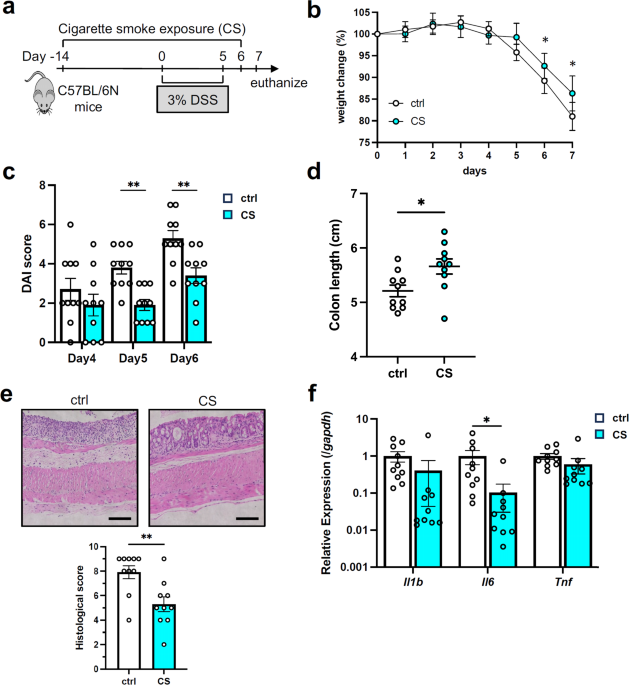
This preclinical study suggests cigarette smoke alters gut microbes and metabolites in ways that can either protect or worsen colitis depending on the model; it identifies 4-HBA as a metabolite that reduced inflammation...