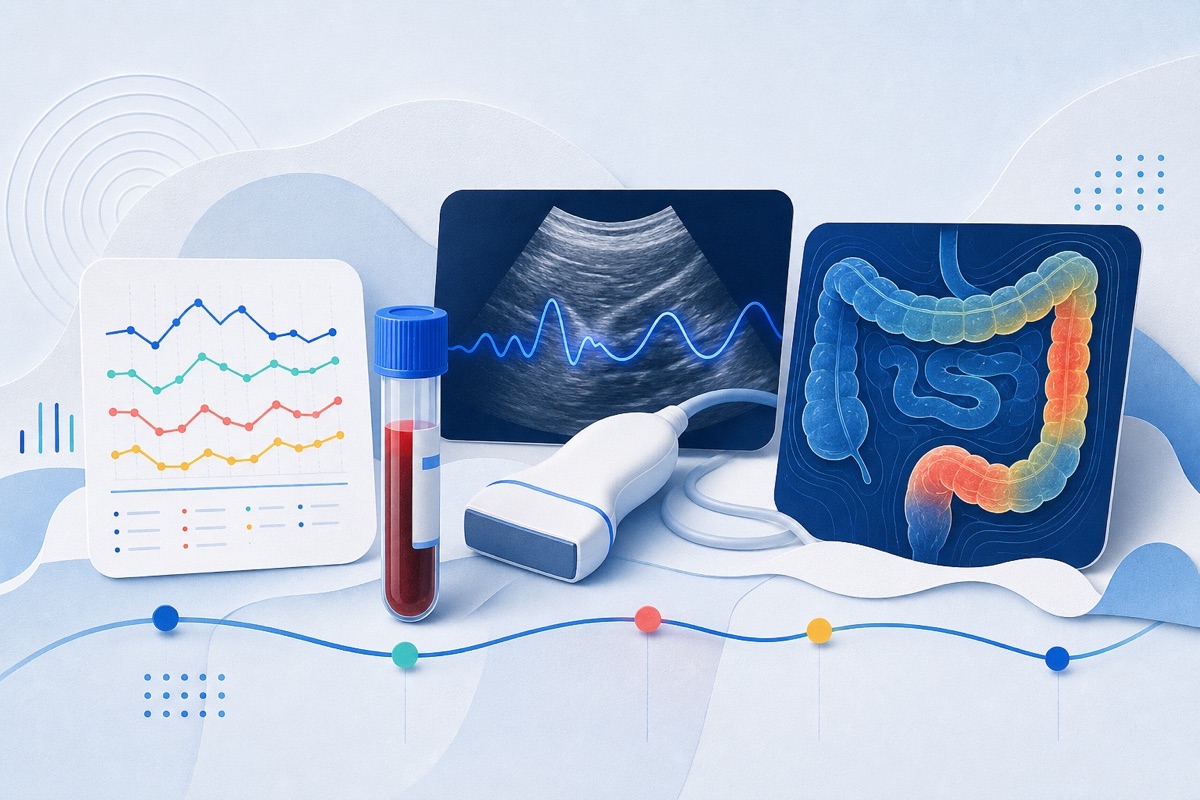
If intestinal ultrasound shows mild isolated hyperemia even with normal bowel wall thickness, this study found a higher chance of treatment changes, steroid use, surgery, or hospitalization within a year — information that could affect monitoring and treatment decisions.
Who Should Pay Attention
Clinicians using intestinal ultrasound for IBD monitoring; adults with Crohn’s disease or ulcerative colitis; teams developing treat‑to‑target monitoring strategies.
Study Snapshot
Story typeResearch paper
Evidence typeResearch paper
Source depthJournal abstract
What To Know
This study looked at people with IBD (Crohn’s disease and ulcerative colitis) who had intestinal ultrasound (IUS) showing normal bowel wall thickness but mild hyperemia (increased blood flow) versus no hyperemia.
Over 12 months, patients with isolated mild hyperemia were more likely to experience an adverse disease outcome (ADO) — defined by treatment change or escalation, corticosteroid use, surgery, or hospitalization — and had a shorter median time to an ADO.
The finding suggests that even when bowel wall thickness is normal, mild hyperemia on IUS may signal higher short‑term risk and could be considered when deciding on treatment optimization or closer monitoring.
The study was retrospective and used a modified Limberg score to grade hyperemia; it compared groups with mLimberg 1 versus mLimberg 0 and reported higher event rates in the mLimberg 1 group.
This brief is based on the article abstract provided by the journal (Structured content depth: abstract) and does not reflect additional full‑text review beyond that abstract.
Keep In Mind
Retrospective cohort design with abstract‑level information only; results suggest association but not proof of causation and would benefit from prospective validation.
Source Details
Review the original publication for the complete reporting, methods, and context.
This Cure8 brief is based on source text from the linked article. Cure8 is informational only and is not a substitute for professional medical advice, diagnosis, or treatment.
Handheld IUS could make noninvasive bowel assessment faster and more accessible for people with IBD, helping with triage and short-term monitoring without immediately resorting to endoscopy or advanced imaging.
AI tools could make objective disease assessment faster and more consistent, help detect inflammation beyond what symptoms suggest, and ultimately support more personalized treatment choices for people with Crohn’s...
People with IBD who have no or few symptoms but still have moderate–severe inflammation on endoscopy face uncertainty about whether to switch therapies to aim for endoscopic remission.