Long-Term Feasibility, Adherence, and Exploratory Clinical Outcomes of Crohn’s Disease Exclusion Diet Plus Partial Enteral Nutrition in Adults with Crohn’s Disease
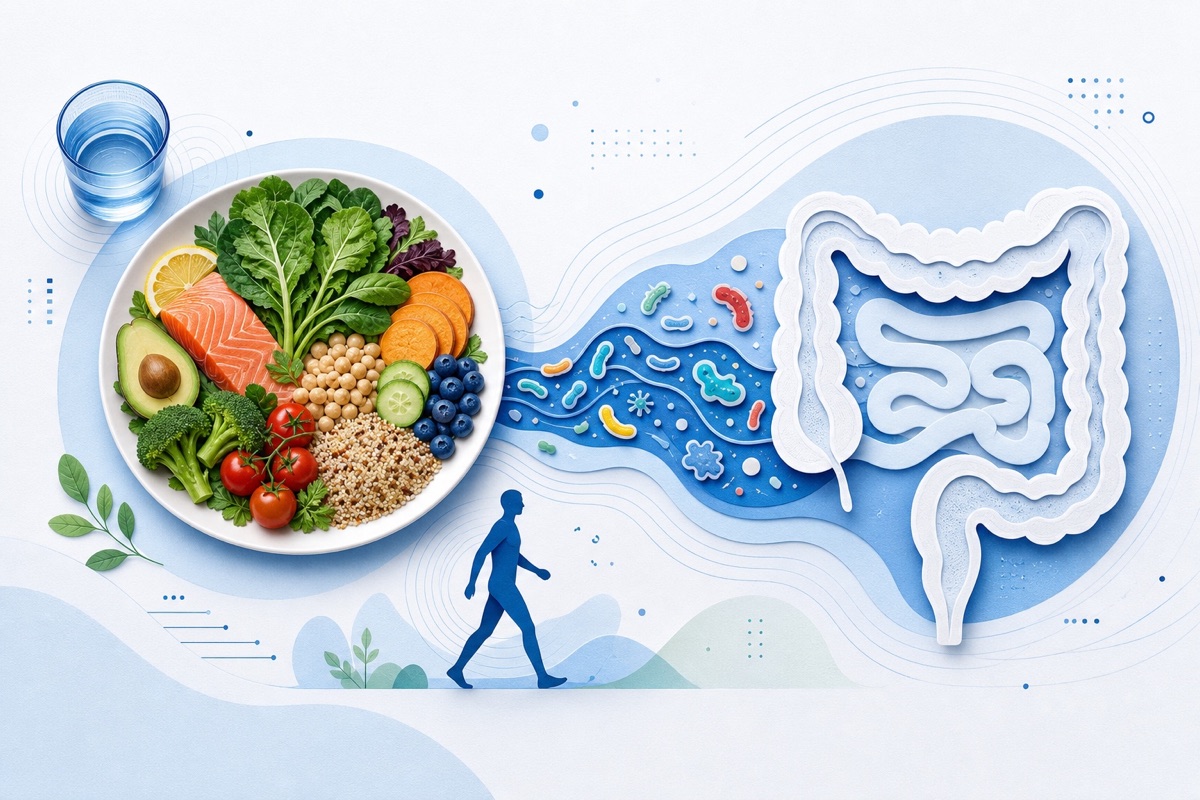
Diet-based therapies like CDED + PEN may help control Crohn’s symptoms and improve nutrition without adding medications. This study suggests some adults can maintain remission and gain nutritional benefits over a year when they can tolerate and adhere to the diet-plus-enteral-nutrition program.
Who Should Pay Attention
Adults with Crohn’s disease (especially those early in disease course), dietitians/nutritionists working in IBD care, and clinicians considering non-drug maintenance strategies.
Study Snapshot
Story typeResearch paper
Evidence typeResearch paper
Source depthJournal abstract
What To Know
This prospective single-center cohort study followed adults with clinically active Crohn’s disease on a 52-week Crohn’s Disease Exclusion Diet plus partial enteral nutrition (CDED + PEN).
About 61% of participants remained adherent for the full year; all adherent patients achieved clinical remission after the 6-week induction and 14 of 22 (63.6%) maintained remission at 12 months. Adherence failures were due to poor tolerability.
The study also found early reductions in inflammatory markers (fecal calprotectin, CRP) and improvements in nutritional measures and body composition among those who stayed on the protocol.
The study suggests CDED + PEN can be a feasible long-term strategy for adults with active Crohn’s disease, with better adherence and outcomes observed in patients with shorter disease duration and higher caloric/protein needs. The report is based on the article abstract and summary provided by the journal (structured content depth: abstract).
It summarizes the authors’ measured outcomes (adherence, clinical remission, inflammatory markers, nutrition, body composition) without implying broader effectiveness beyond this cohort.
Keep In Mind
This is a single-center prospective cohort reported in the journal Nutrients and the classification is based on the article abstract. The study size is small (36 enrolled, 22 adherent), and all adherence discontinuations were due to tolerability; results may not generalize.
The abstract summarizes clinical and laboratory measures but does not replace individualized medical advice. Larger, randomized trials would provide stronger evidence.
Source Details
Review the original publication for the complete reporting, methods, and context.
This Cure8 brief is based on source text from the linked article. Cure8 is informational only and is not a substitute for professional medical advice, diagnosis, or treatment.
This study suggests that higher intake of specific fibers (beta‑glucan and inulin) may be linked to lower Crohn’s risk in people with a family history, and it connects those fibers to biomarkers of inflammation, barrier...
Dietary strategies that reduce inflammation and oxidative stress could complement medical care for people with IBD by potentially lowering biomarkers linked to disease activity.
Diet is a modifiable factor that may influence inflammation and the gut microbiome. If the Mediterranean diet is linked with lower disease activity and inflammatory markers in newly diagnosed Crohn’s disease, patients...