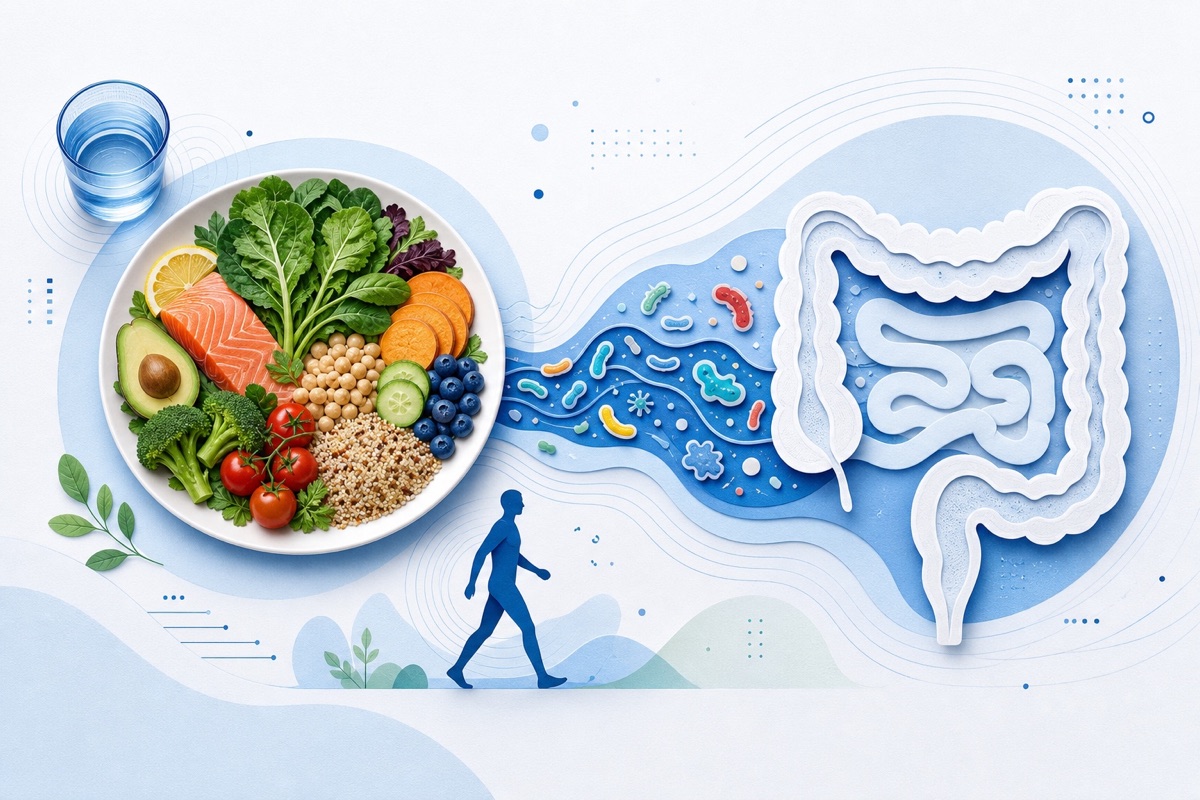
Dietary patterns like the Mediterranean diet may reduce inflammation and improve quality of life for people with Crohn’s disease by beneficially altering the gut microbiome and inflammatory markers. That could offer a non-pharmacologic adjunct to standard care if confirmed.
Who Should Pay Attention
Adults with Crohn’s disease; patients exploring dietary approaches; clinicians advising on nutrition; researchers in diet–microbiome–IBD fields.
Study Snapshot
Story typeResearch paper
Evidence typeSystematic Review or Meta Analysis
Source depthFull source text
What To Know
This systematic review pooled evidence from five studies (combined sample >83,000) that examined the Mediterranean diet (MD) in people with Crohn’s disease.
The authors report that higher MD adherence was uncommon among patients but was associated with lower disease activity, better quality of life, reduced inflammatory markers, and changes in the gut microbiome such as increased short-chain fatty acid production and fewer pro‑inflammatory bacteria.
The review suggests a plausible anti‑inflammatory mechanism linking MD patterns to gut microbiome changes, but it does not establish causation or replace individualized medical treatment.
The included studies and exact measures of effect are not detailed here; larger prospective or interventional trials would be needed to confirm benefits and guide clinical recommendations.
Keep In Mind
This article is a systematic review published in a peer-reviewed journal and summarizes five studies; it reports associations and proposed mechanisms but does not provide randomized trial evidence here. Consult healthcare providers before changing treatment. SummaryConfidence: medium
Source Details
Review the original publication for the complete reporting, methods, and context.
This Cure8 brief is based on source text from the linked article. Cure8 is informational only and is not a substitute for professional medical advice, diagnosis, or treatment.
Many people with Crohn’s disease have ongoing inflammation despite stable medication. If dietary personalization can reduce inflammation, it could offer a nonpharmacologic add-on to help bridge gaps without immediate...
The study links a common plant compound (oxalate) to higher stool levels and worse inflammation in IBD, suggesting diet and gut handling of oxalate could affect disease activity and that microbiome-targeted strategies...
Vitamin D deficiency is common in people with IBD and may relate to disease activity, complications, and quality of life; understanding this link could influence monitoring and adjunctive care.