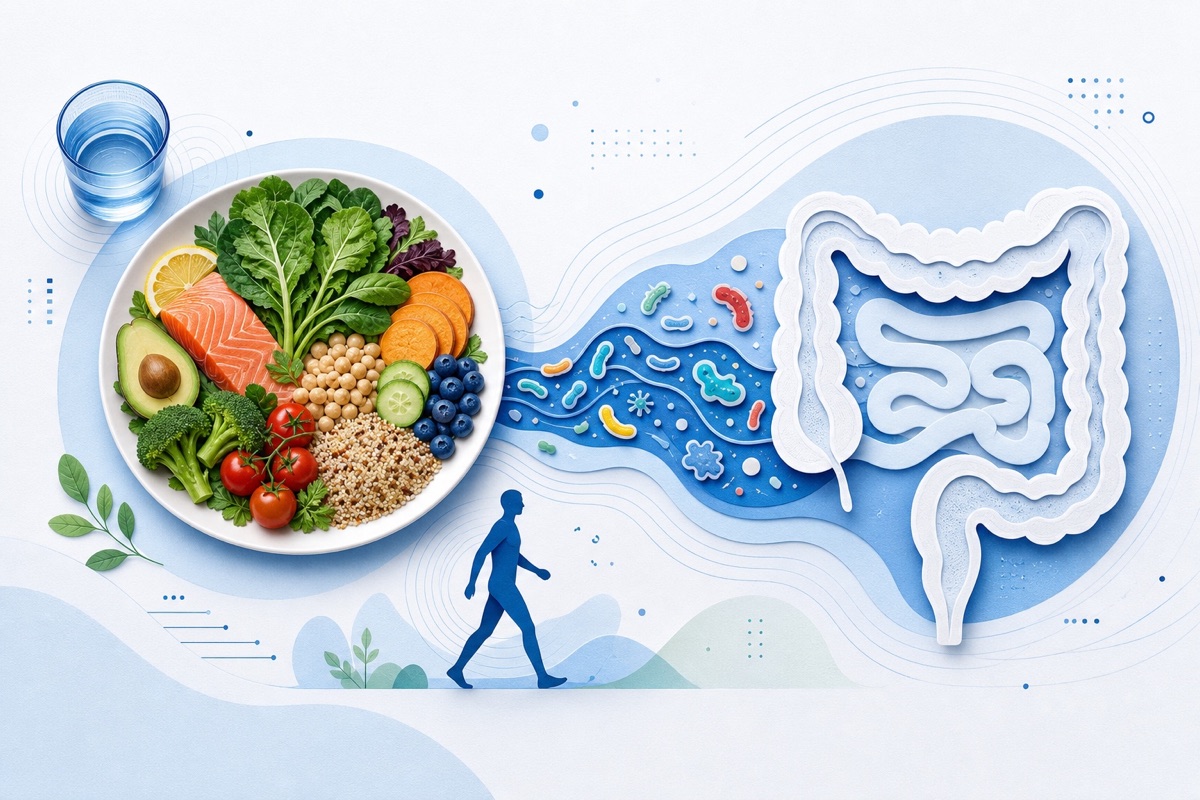
Partial enteral nutrition combined with an exclusion diet promotes a healthy gut microbiome in patients with mild to moderately active ulcerative colitis: a quasi-experimental study.
Dietary strategies that change the gut microbiome are of interest because they might modify inflammation without drugs. This study suggests PEN+ED can shift the microbiome toward a healthier profile in UC, though short-term clinical benefit was not demonstrated.
Who Should Pay Attention
Patients with ulcerative colitis considering diet-based interventions; gastroenterologists and IBD clinicians; researchers in diet–microbiome therapies.
Study Snapshot
Story typeResearch paper
Evidence typeResearch paper
Source depthJournal abstract
What To Know
This was a prospective, open-label, non-randomized (quasi-experimental) trial comparing PEN+ED plus standard of care (SOC) versus SOC alone for 4 weeks in 60 patients (30 per arm). Clinical remission (SCCAI ≤2) at week 4 occurred in 66.7% of the PEN+ED group and 83.3% of the SOC group.
PEN+ED did not show additional clinical benefit at 4 weeks and had a lower proportion with rectal bleeding score of 0 compared with SOC.
Microbiome analyses in a subset (n=14) from the PEN+ED arm showed increased alpha diversity, higher abundance of presumed beneficial taxa, and depletion of pathobionts; these microbiome changes were negatively associated with disease severity.
Keep In Mind
Non-randomized, open-label design and small microbiome subset limit conclusions. The report is an abstract-based/full-text summary from the published study; it does not establish long-term clinical benefit.
Source Details
Review the original publication for the complete reporting, methods, and context.
This Cure8 brief is based on source text from the linked article. Cure8 is informational only and is not a substitute for professional medical advice, diagnosis, or treatment.
The study identifies a food-processing method (black tea processing) that increased flavonoids and improved outcomes in a mouse model of colitis, suggesting that specific dietary preparations might influence gut...
This preclinical study suggests a marine-derived collagen peptide fraction may strengthen intestinal barrier function, reduce oxidative stress, and partially restore gut microbiota in models of colitis — mechanisms...
This research looks at whether donor and patient diets can influence how well fecal microbiota transplants work. For people with IBD (including Crohn’s and ulcerative colitis), improving FMT success could mean better...