
reference.medscape.com
Cure8 news brief
Cure8 news brief
People with Crohn’s disease—especially those on biologics like infliximab—may have atypical or prolonged infections and can need broader testing when urinary symptoms persist. The case shows diagnostic steps clinicians commonly use for urethritis that could affect care decisions.
Adult patients with Crohn’s disease (especially on biologics), clinicians (primary care, infectious disease, gastroenterology), and caregivers concerned about infections while immunosuppressed.
This Medscape Case Challenge describes a 30‑year‑old man with Crohn’s disease on infliximab who presents with persistent dysuria despite negative routine STI and urine testing.
The case walks through stepwise testing (NAATs for gonorrhea/chlamydia, urinalysis and culture, broader NAATs for Trichomonas and mycoplasmas, HSV testing) and discusses differential diagnosis and management considerations for urethritis in an immunosuppressed patient.
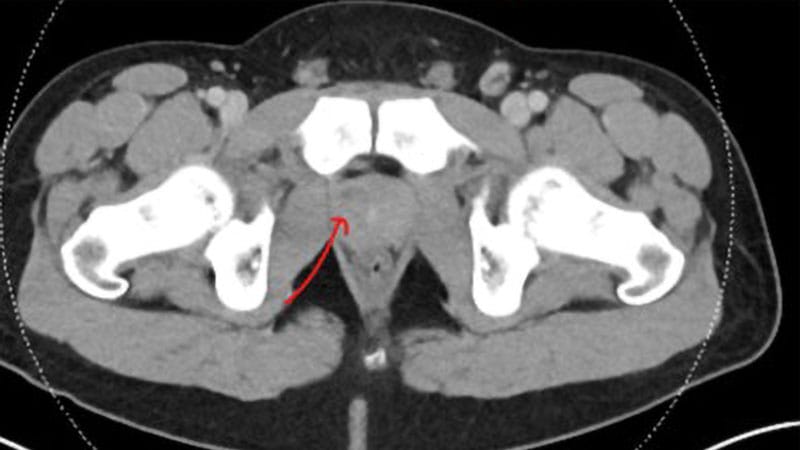
The article emphasizes repeated testing and broadening the diagnostic workup when initial tests are negative, and it reviews when imaging or empiric antibiotics may or may not be indicated. It notes the patient declined empirical antibiotics early, and it highlights consideration of noninfectious causes and less common pathogens in persistent urethritis.
This is an educational case challenge aimed at clinicians; it is not new research or treatment guidance. It illustrates diagnostic reasoning rather than providing novel therapies or recommendations.
This is a clinical case discussion (educational) rather than a research study. Recommendations are illustrative; individual management depends on clinical context. The article focuses on diagnostic evaluation and reasoning for persistent urethritis and does not report trial data or new treatments.
Review the original publication for the complete reporting, methods, and context.
This Cure8 brief is based on source text from the linked article. Cure8 is informational only and is not a substitute for professional medical advice, diagnosis, or treatment.
Patients with IBD or new symptoms should understand that Crohn’s disease and ulcerative colitis can look very similar but affect different parts of the gut and may require different treatments. Accurate diagnosis matters...
Blood in stool can be a sign of Crohn’s-related complications (ulcers, fissures, fistulas) or other conditions; prompt evaluation can identify the cause and prevent anemia or serious complications. The article summarizes...
This article gives a clear, patient-friendly overview of Crohn’s disease: what it is, common symptoms and complications, likely causes, and how doctors diagnose it. That context can help people recognize when to seek...