People with Crohn’s disease who need a repeat ileocolic resection may wonder whether laparoscopic surgery is a good option. This study suggests laparoscopic attempts are often successful, and if conversion is needed outcomes are similar to planned open surgery.
That may reassure patients considering a minimally invasive approach when appropriate.
This study looked specifically at redo ileocolic resections (operations to resect the last part of the small bowel and first part of the colon) in patients with Crohn’s disease. Surgeons attempted laparoscopy in selected patients and converted to open surgery in about 10% of those attempts.
The main factor linked to needing conversion was penetrating disease (fistula/abscess-type complications). When conversion occurred, patients did not have worse short-term outcomes compared with those who had a planned open operation, suggesting starting laparoscopically can be reasonable in appropriately selected redo cases.
Decisions about approach are individualized; this study supports that an initial laparoscopic attempt is often safe but may be more likely to require conversion when penetrating disease is present.
Keep In Mind
This is an abstract-level report from a single quaternary referral centre using prospectively collected data (2009–2021). Selection criteria for attempting laparoscopy and longer-term outcomes (beyond the perioperative period) are not detailed in the abstract. Findings reflect experienced-centre practice and may not generalize to all settings.
Source Details
Review the original publication for the complete reporting, methods, and context.
This Cure8 brief is based on source text from the linked article. Cure8 is informational only and is not a substitute for professional medical advice, diagnosis, or treatment.
If surgeons can safely perform a primary bowel reconnection when they encounter an intra-abdominal abscess during Crohn surgery, some patients may avoid a temporary stoma and its associated morbidity.
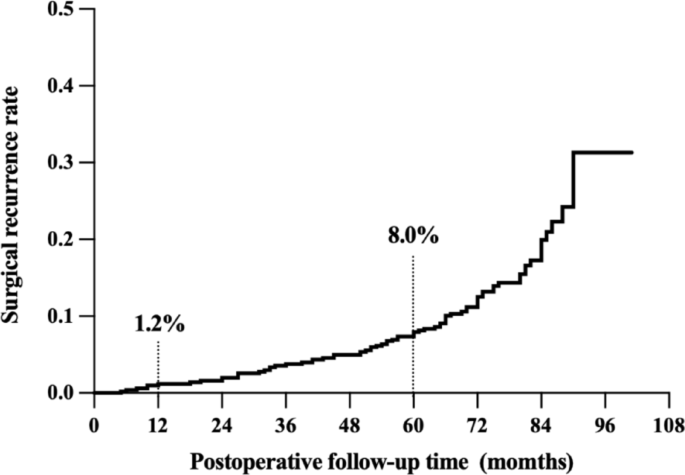
The study highlights factors linked to needing another operation after ileocecal resection for Crohn’s disease and suggests postoperative biologic therapy may lower long-term reoperation risk. That directly affects...