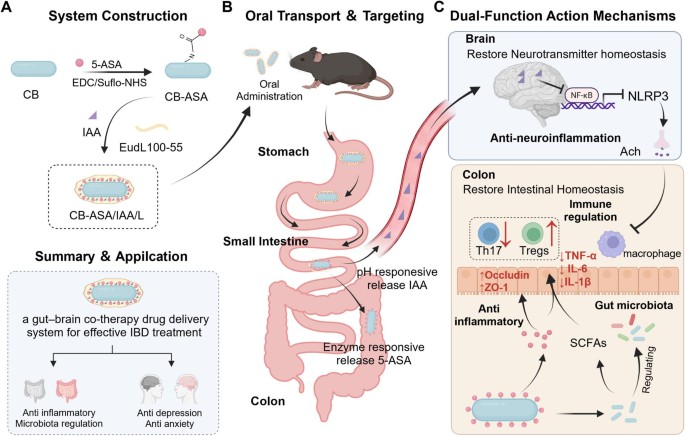
The study presents a novel probiotic-based delivery system that targets both intestinal inflammation and anxiety/depression through the gut–brain axis, a potentially relevant concept for people with IBD who commonly experience psychiatric comorbidities.
Who Should Pay Attention
Researchers (microbiome, gut–brain axis, drug-delivery), clinicians treating IBD with psychiatric comorbidity, and informed patients interested in emerging preclinical therapies.
Study Snapshot
Story typeResearch paper
Evidence typeResearch paper
Source depthJournal abstract
What To Know
The researchers combined Clostridium butyricum (a probiotic) carrying 5-ASA with a pH-responsive coating containing IAA to achieve sequential, site-specific release.
In mice with chemically induced colitis, the system reportedly improved intestinal barrier function, shifted macrophages toward an anti-inflammatory (M2) phenotype, helped rebalance Th17/Treg immune populations, reduced colitis recurrence, and lessened anxiety- and depression-like behaviors.
The work is preclinical (mouse) and presented as a mechanistic, nanobiotechnology/biomaterials study rather than a clinical trial. It suggests a combined gut–brain therapeutic concept but does not provide evidence that the approach is safe or effective in humans.
Keep In Mind
Results are preclinical and described at abstract depth; the study used mouse models and reports mechanistic outcomes. Human safety and efficacy are not addressed in this article.
Source Details
Review the original publication for the complete reporting, methods, and context.
This Cure8 brief is based on source text from the linked article. Cure8 is informational only and is not a substitute for professional medical advice, diagnosis, or treatment.
IBD is increasingly linked with anxiety, depression, and cognitive symptoms; this study suggests gut microbes may change tryptophan metabolism in colitis and contribute to those brain-related symptoms, which could point...
The study describes a new oral nanotherapy that delivered apremilast to the inflamed colon in mice and reportedly reduced gut inflammation and behaviors resembling anxiety/depression—suggesting a combined...
Targeted release of mesalamine to the colon could increase local drug levels and reduce upper-GI exposure and systemic side effects. New delivery platforms may improve effectiveness for ulcerative colitis without...