This study shows that people with IBD can display distinct self-care and illness-perception profiles rather than a single pattern; tailoring education and psychological support to these profiles could improve self-management.
Who Should Pay Attention
Adult patients with IBD, IBD clinicians (gastroenterologists, IBD nurses), mental health professionals working with IBD, and researchers studying patient-reported outcomes and self-management.
Study Snapshot
Story typeResearch paper
Evidence typeResearch paper
Source depthJournal abstract
What To Know
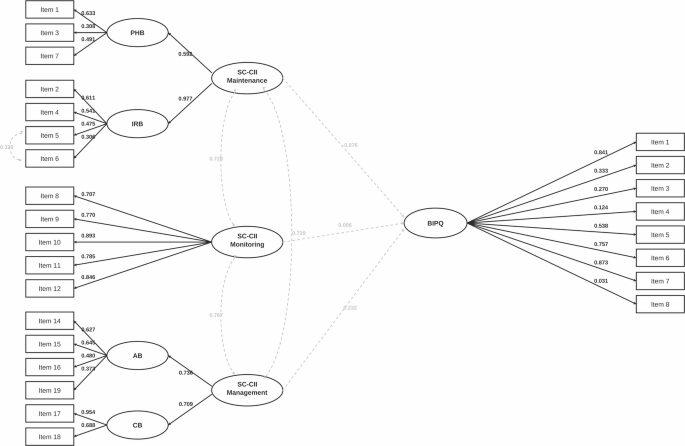
Researchers recruited 450 adults from nine Italian IBD units and applied structural equation modeling and unsupervised cluster analysis to patient-reported measures of self-care, illness perception, self-efficacy, and psychological distress.
The overall model found no simple linear association between self-care domains and illness perception, but cluster analysis produced four clinically interpretable subgroups (Engaged Copers; Overwhelmed and Passive; Detached and Vulnerable; Minimizers with Functional Engagement) that differed substantially in illness perception and self-care behaviors.
Practical takeaway Person-centered profiling — grouping patients by combined cognitive-emotional and behavioral patterns — may help clinicians target self-management education and psychological assessment rather than relying on average associations across all patients.
Keep In Mind
Structured content depth: abstract. The brief is grounded in the article abstract provided by the journal; Cure8 did not review the full paper beyond the supplied text. Cross-sectional design identifies associations and clusters but does not establish causation.
Source Details
Review the original publication for the complete reporting, methods, and context.
Funding disclosed by the source: Università Cattolica del Sacro Cuore
This Cure8 brief is based on source text from the linked article. Cure8 is informational only and is not a substitute for professional medical advice, diagnosis, or treatment.
Body-image concerns in IBD are linked with poorer mental health, eating behaviours, and overall quality of life. Understanding these experiences can help clinicians and support services better address emotional and...
The study links worse UC activity with higher rates of anxiety and depression and with poorer quality of life among patients in Pakistan, suggesting mental-health screening could be relevant to overall disease...
Fear of movement was more common and more severe in people with ulcerative colitis in this study. Addressing kinesiophobia could help increase physical activity and improve function and quality of life for people with...