Cellular and molecular gastroenterology and hepatology· via Europe PMC
Cure8 research brief
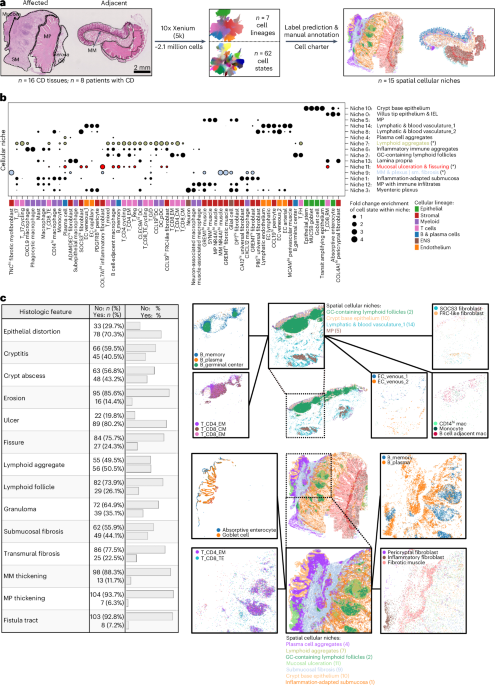
Single-cell and spatial transcriptomics across populations with perianal fistulizing Crohn's disease shows pro-inflammatory CD4+ macrophage involvement in disease progression.
The study points to a specific immune cell type (pro-inflammatory CD4+ macrophages) and altered cellular interactions in rectal tissue that are linked to perianal fistulizing Crohn's disease, which may help explain mechanisms behind a severe IBD complication and guide future biomarker or therapy research.
Who Should Pay Attention
Researchers studying IBD pathogenesis, gastroenterologists and colorectal surgeons managing perianal Crohn's disease, and patients with perianal/fistulizing Crohn's disease interested in emerging biological insights.
Study Snapshot
Story typeResearch paper
Evidence typeResearch paper
Source depthJournal abstract
What To Know
The work is a molecular and cellular research study (single-cell RNA-seq, spatial transcriptomics, immunofluorescence, and patient-derived organoids) that characterizes immune cell types and signaling in rectal tissue. It does not report a new treatment or clinical trial results.
The findings suggest macrophage-driven disruption of local cellular networks may contribute to fistula formation, which could guide future biomarker or therapeutic research.
Keep reading the original paper for methods and full data: this Cure8 note is grounded in the article abstract and extracted text (structured content depth: abstract/summary), not a full independent review of the underlying data or peer commentary.
Keep In Mind
This is a research article reporting molecular and cellular profiling (single-cell and spatial transcriptomics) and organoid experiments. It describes associations and mechanistic hypotheses but does not provide clinical trial data or immediate treatment changes. The structured content is based on the article abstract and extracted text.
Source Details
Review the original publication for the complete reporting, methods, and context.
This Cure8 brief is based on source text from the linked article. Cure8 is informational only and is not a substitute for professional medical advice, diagnosis, or treatment.
If correct, the paper points to a previously underappreciated immune cell (GzmK+ tissue-resident CD8+ T cells) as a potential driver of Crohn’s inflammation — which could lead to new biomarkers or therapies that work...
The paper maps distinct stromal cell states tied to inflamed versus fibrotic tissue niches in Crohn’s disease and shows that these states have different chromatin configurations and drug-modifiable properties — pointing...
If validated, a blood test for cytotoxic CD4+ T cells at diagnosis could help predict who is less likely to respond to anti‑TNF drugs, potentially allowing earlier selection of alternative therapies for some children...