Frontiers in Immunology
Cure8 research brief
Cure8 research brief
Metabolic interactions between epithelial and immune cells may help explain persistent inflammation and barrier problems in IBD and point to new therapeutic targets that could complement current immune-targeting drugs.
Clinicians and researchers interested in IBD pathogenesis, metabolic-targeted therapies, and translational research; informed patients following research on novel treatment strategies.
This is a review article from Frontiers in Immunology summarizing basic-science work linking epithelial mitochondrial metabolism to immune activation in the gut.
The authors describe how metabolic remodeling in epithelial and immune cells can act through signaling metabolites to influence barrier integrity and immune cell polarization toward pro‑inflammatory states.
The review frames metabolic pathways (glucose, lipid, amino acid metabolism and mitochondrial function) as potential targets for precision therapies, and it highlights mechanistic connections rather than reporting clinical trial results or approved treatments.
Because this is a scholarly review (structured content depth: abstract), it synthesizes existing studies to suggest research directions and therapeutic opportunities rather than presenting new clinical data.
This is a review article (abstract-level extraction). It synthesizes basic and translational studies but does not report new clinical trial outcomes. Translating metabolic-targeting strategies into safe, effective treatments will require further preclinical and clinical testing.
Review the original publication for the complete reporting, methods, and context.
This Cure8 brief is based on source text from the linked article. Cure8 is informational only and is not a substitute for professional medical advice, diagnosis, or treatment.
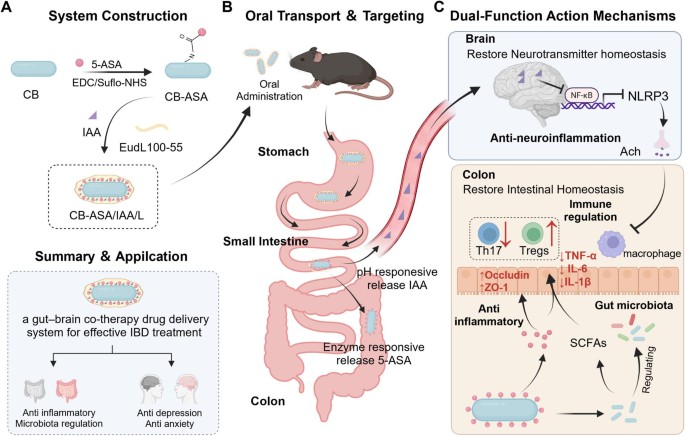
The study presents a novel probiotic-based delivery system that targets both intestinal inflammation and anxiety/depression through the gut–brain axis, a potentially relevant concept for people with IBD who commonly...
IBD is increasingly linked with anxiety, depression, and cognitive symptoms; this study suggests gut microbes may change tryptophan metabolism in colitis and contribute to those brain-related symptoms, which could point...
A treatable-traits approach could help tailor IBD care to each patient by targeting specific biological, comorbid, and psychosocial drivers of disease and quality-of-life impairment, potentially improving how we choose...