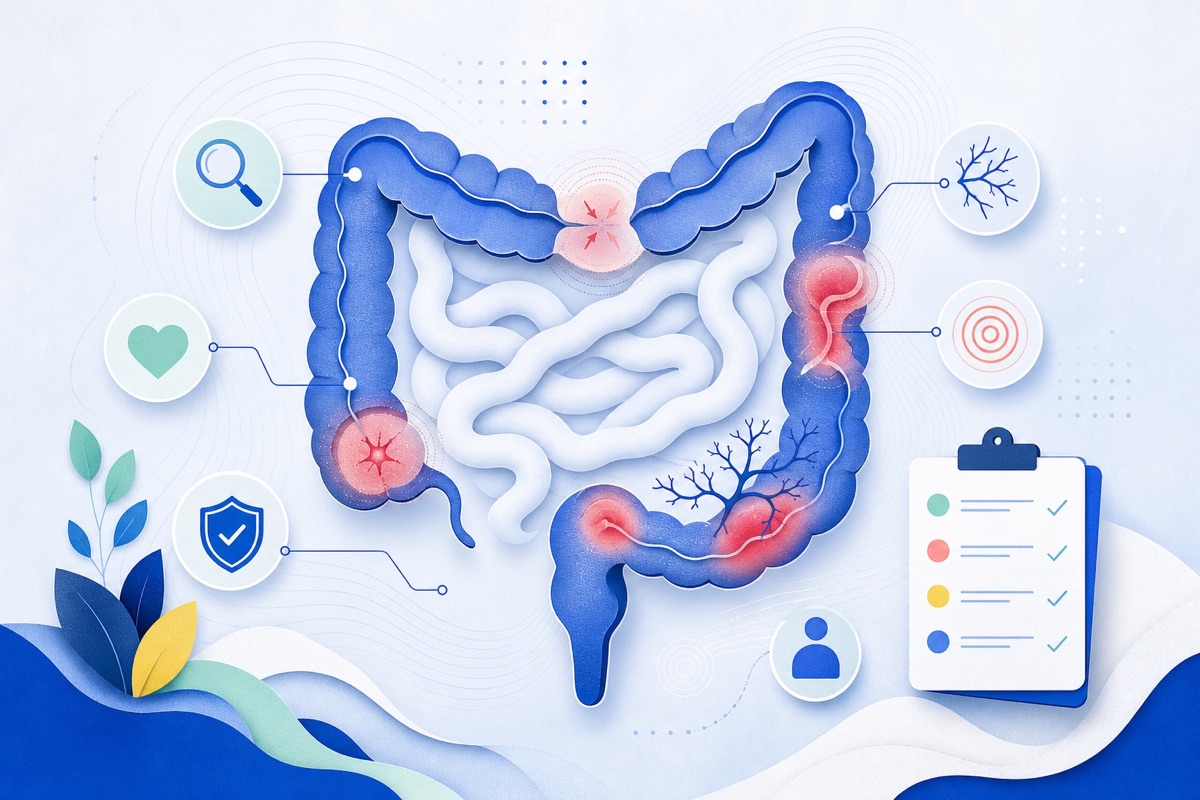
PSC occurring with IBD changes cancer risk and surveillance needs: patients can have extensive but asymptomatic colitis and a higher colorectal and biliary cancer risk. The review outlines gaps in diagnosis, monitoring, and treatment development that affect long-term outcomes.
Who Should Pay Attention
Patients with IBD (especially ulcerative colitis), clinicians managing IBD or hepatobiliary disease, and researchers studying the gut–liver axis, microbiome, or PSC therapeutics.
Study Snapshot
Story typeResearch paper
Evidence typeResearch paper
Source depthJournal abstract
What To Know
This article summarizes current evidence on the epidemiology, proposed mechanisms, and management gaps in PSC-IBD.
It highlights that PSC-IBD can be clinically silent yet biologically aggressive, likely involving genetics, immune dysregulation (including Th17/Treg imbalance), intestinal barrier problems, and microbiome and bile-acid disturbances along the gut–liver axis.
The review emphasizes bidirectional screening: all patients with PSC should have ileocolonoscopy with biopsies regardless of symptoms, and patients with IBD who have cholestatic liver tests (eg, elevated GGT or alkaline phosphatase) should be assessed with MR cholangiopancreatography.
It notes that no medical therapy has clearly altered PSC's natural history and that liver transplantation remains the only definitive treatment for advanced disease. Research and clinical gaps discussed include need for noninvasive biomarkers, microbiota-directed strategies, individualized risk stratification, and disease-modifying trial endpoints.
Keep In Mind
Structured content depth: abstract — the supplied text is from the article abstract. The review synthesizes current literature but does not present new trial results; findings and recommendations reflect the authors' synthesis rather than novel clinical trial evidence.
Source Details
Review the original publication for the complete reporting, methods, and context.
This Cure8 brief is based on source text from the linked article. Cure8 is informational only and is not a substitute for professional medical advice, diagnosis, or treatment.
Researchers report links between copper-driven cell death pathways and IBD biology; identifying cuproptosis-related biomarkers or drugs could open new diagnostic or therapeutic avenues for people with Crohn's disease or...
This study suggests machine learning of stool microbiome data could eventually help distinguish IBD (especially Crohn’s) from healthy people and some other bowel or systemic conditions.
This review spotlights non-bacterial members of the gut microbiota (viruses and fungi) that may contribute to IBD by altering barrier function, immune responses, and interactions with bacteria. For people with IBD, these...